Niacinamide, the skincare superstar, has cemented its place in routines worldwide. From tackling enlarged pores and stubborn redness to balancing oil production and fortifying the skin barrier, its multi-faceted benefits make it a must-have for almost every skin type. But with an ever-growing sea of niacinamide serums on the market, choosing “the one” can feel like navigating a minefield. Today, we’re diving deep into a head-to-head battle between two titans: Anua’s Peach 70% Niacinamide Serum and The Ordinary’s Niacinamide 10% + Zinc 1%. One is a K-beauty darling, celebrated for its elegant formulations and gentle touch. The other, a Western cult-favorite, known for its no-frills, high-potency approach. Both promise 10% niacinamide, but as we all know here at Glow Coded, the ingredient list tells only half the story. The formulation is where the magic (or the misery) truly happens. Let’s peel back the layers and see which one truly earns its stripes.
TL;DR winner
After weeks of rigorous testing, meticulous observation, and a whole lot of close-up mirror time, our winner for the most balanced, pleasant, and effective niacinamide experience is the Anua Peach 70% Niacinamide Serum. While The Ordinary offers undeniable efficacy for its price point, Anua’s superior formulation, texture, and comprehensive skin benefits ultimately clinched the victory for a more enjoyable and holistic skincare journey.
Why this fight matters
Niacinamide, or Vitamin B3, is truly a powerhouse ingredient. Its ability to visibly improve enlarged pores, refine uneven skin tone, soften fine lines and wrinkles, diminish dullness, strengthen a compromised skin barrier, and reduce redness makes it an indispensable staple. It’s truly one of those rare ingredients that almost everyone can benefit from, regardless of age or skin concern. Here at Glow Coded, we’re big fans, and you can even check out our comprehensive guide to the best niacinamide serums for every skin type if you’re looking for more options.
The Ordinary burst onto the scene years ago, democratizing active skincare with its transparent, no-nonsense approach and unbelievably low prices. Their Niacinamide 10% + Zinc 1% quickly became a global best-seller, often serving as many people’s first foray into high-strength actives. It’s stripped-back, potent, and gets the job done – or so the story goes.
Enter Anua, a rising star in the K-beauty world, particularly known for its heartleaf-infused products and commitment to gentle, effective, and aesthetically pleasing formulations. Their Peach 70% Niacinamide Serum took the internet by storm, promising not just the pore-refining and brightening benefits of niacinamide but also a delightful sensory experience and a boost of hydration and antioxidants from its peach extract base.
This isn’t just a battle of two serums; it’s a philosophical clash. Do you opt for the minimalist, potent, and budget-friendly option that focuses almost exclusively on its star active? Or do you lean into the K-beauty philosophy of a holistic, multi-tasking serum that combines its hero ingredient with a symphony of supporting players designed to nurture and enhance the skin barrier while delivering results? This fight matters because it addresses a fundamental question many skincare users face: how much is too much, and how much is just right, when it comes to supporting ingredients in an active serum? For many, choosing between these two represents a choice between efficacy at all costs versus a more balanced, skin-kind approach.
Ingredient deck comparison
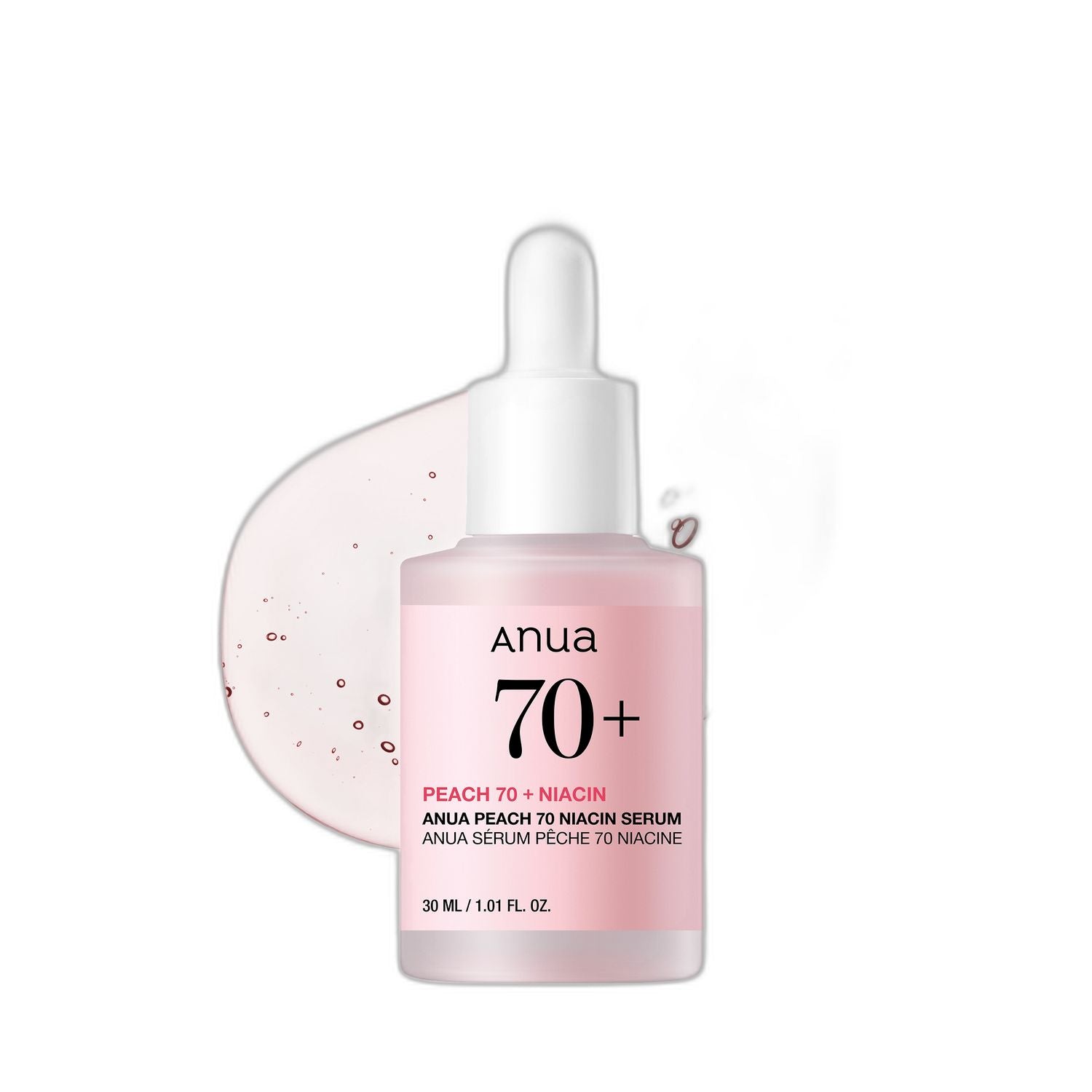
This is where the real nuance comes into play. Both serums proudly feature 10% niacinamide, which is a significant and effective concentration. However, the supporting cast in each bottle tells a very different story.
Let’s break down Anua first.
Anua Peach 70% Niacinamide Serum (30ml, ~$20-25 USD)
- Niacinamide (10%): The star, as discussed, for pores, oil, redness, and barrier support.
- Prunus Persica (Peach) Fruit Extract (70%): This is the base of the serum, not just a tiny amount for marketing. Peach extract is rich in vitamins (A, C, E) and antioxidants, which can help protect the skin from environmental damage, provide a natural glow, and contribute to overall skin health. It also gives the serum its lovely peachy hue and subtle, natural scent.
- Saccharomyces Ferment Filtrate: A fermented ingredient, often found in K-beauty products (think fermented essences like Missha Time Revolution The First Treatment Essence). It’s known for its potential to brighten skin, improve texture, and enhance skin barrier function, working synergistically with niacinamide.
- Panthenol (Vitamin B5): A skin-conditioning humectant that attracts and holds moisture. More importantly, it’s a powerful soothing and healing agent, making it excellent for calming irritation and supporting barrier repair. This is a crucial addition for mitigating any potential niacinamide sensitivity.
- Alpha-Arbutin: A lesser-known but highly effective skin-brightening ingredient. It works by inhibiting tyrosinase, the enzyme responsible for melanin production, thus helping to fade hyperpigmentation, dark spots, and post-inflammatory erythema (PIE). It’s a fantastic pairing with niacinamide for an overall more even skin tone.
- Sodium Hyaluronate (Hyaluronic Acid): A classic humectant that draws moisture into the skin, providing hydration and a plumping effect. It’s a key ingredient in many hydrating serums, and if you’re curious about its role, we’ve got a great article on the truth about hyaluronic acid.
- Ceramide NP: Essential lipids that make up a significant portion of the skin barrier. Including ceramides helps to reinforce the skin’s natural protective barrier, locking in moisture and protecting against environmental aggressors. This is key for overall skin health and resilience.
- Adenosine: A yeast-derived ingredient known for its anti-aging properties, helping to improve skin elasticity and smooth the appearance of fine lines.
- Betaine: Another humectant and amino acid derivative that helps balance skin hydration and protect against irritation.
What’s notably absent from Anua’s formulation are common irritants like ethanol, artificial fragrance, and essential oils, making it a strong contender for sensitive skin types. It’s a truly holistic approach: high-strength niacinamide supported by a powerhouse of brightening, soothing, hydrating, and barrier-supporting ingredients.
Now, let’s turn our attention to The Ordinary.
The Ordinary Niacinamide 10% + Zinc 1% (30ml, ~$6-8 USD)
- Niacinamide (10%): The primary active, just like Anua, targeting pores, oil, and redness.
- Zinc PCA (1%): This is the key supporting active. Zinc PCA is a salt of zinc pyrrolidone carboxylic acid. It’s primarily included for its excellent sebum-regulating properties, making it fantastic for oily and acne-prone skin. It also has mild anti-inflammatory and antibacterial benefits, which can help calm breakouts.
- Pentylene Glycol: A humectant and solvent that helps other ingredients penetrate the skin. It also has some antimicrobial properties.
- Tamarindus Indica Seed Gum: A plant-derived polysaccharide that acts as a film-former and humectant, providing some hydration and helping with texture.
The Ordinary’s approach is distinctly minimalist. It focuses on delivering a high concentration of niacinamide and zinc PCA in a straightforward, no-frills base. There are no fancy fruit extracts, fermented ingredients, ceramides, or additional brighteners beyond the niacinamide itself. This stripped-back approach is part of its appeal – you know exactly what you’re getting, and it’s designed to be effective for specific concerns (oil, pores, some redness) without adding anything deemed “unnecessary.”
Summary Comparison Table:
| Feature | Anua Peach 70% Niacinamide Serum | The Ordinary Niacinamide 10% + Zinc 1% |
|---|---|---|
| Base Ingredient | 70% Peach Fruit Extract (antioxidant-rich, hydrating) | Water-based, minimalist |
| Niacinamide Conc. | 10% | 10% |
| Soothing Agents | Panthenol, Betaine | Minimal (none explicitly for soothing beyond niacinamide’s inherent properties) |
| Brightening Agents | Niacinamide, Alpha-Arbutin, Saccharomyces Ferment Filtrate, Peach Extract | Niacinamide |
| Hydration Boost | Peach Extract, Panthenol, Sodium Hyaluronate, Betaine | Tamarindus Indica Seed Gum, Pentylene Glycol |
| Barrier Support | Ceramide NP, Panthenol, Saccharomyces Ferment Filtrate | Minimal |
| Other Key Actives | Alpha-Arbutin (brightening), Adenosine (anti-aging), Saccharomyces (texture/barrier) | Zinc PCA (sebum regulation, anti-inflammatory) |
| Potential Irritants | None (free of ethanol, fragrance, essential oils) | None (but 10% niacinamide can be irritating for some without soothing buffers) |
| Overall Philosophy | Multi-tasking, holistic, gentle, barrier-supporting, K-beauty “skin health” approach | Targeted, minimalist, potent, Western “active-focused” approach |
It’s clear from this breakdown that Anua offers a much more comprehensive and nurturing formulation. While both deliver 10% niacinamide, Anua surrounds it with ingredients designed to enhance its benefits, mitigate potential irritation, and support overall skin health. The Ordinary, on the other hand, is a more focused product, leaning heavily on niacinamide and zinc for specific concerns.
Texture, finish, pilling test
Beyond the ingredients, how a serum feels and behaves on your skin is paramount, especially when layering multiple products as part of a complete Korean routine.
Anua Peach 70% Niacinamide Serum: From the moment you dispense it, the Anua serum feels delightful. It has a lightweight, slightly viscous gel-like consistency, almost like a thin essence. It spreads effortlessly across the skin and absorbs remarkably quickly without leaving any residue.
- Texture: Silky, smooth, slightly bouncy gel.
- Finish: Leaves a beautiful, natural dewy glow. It’s not greasy or sticky in the slightest, feeling like a light layer of hydration has just been absorbed. It contributes to that coveted “glass skin” look without any heaviness.
- Pilling Test: This serum is a dream to layer. I tested it under various toners (like Round Lab Dokdo Toner), essences (like COSRX Snail Mucin Essence – you can find more on best snail mucin products here!), moisturizers (Laneige Water Bank Blue Hyaluronic Cream), and several different sunscreens (including my favorite best Korean sunscreens like Beauty of Joseon Relief Sun). Not once did it pill. It seamlessly integrates into any routine, making it incredibly user-friendly and perfect for daily use, even under makeup.
The Ordinary Niacinamide 10% + Zinc 1%: This is where The Ordinary often loses points for many users, myself included. While the liquid itself is clear and relatively thin, its texture can be polarizing.
- Texture: Watery, but with a noticeable tackiness that lingers slightly after application. It can feel a bit “tight” or drying for some, especially if applied to dry skin.
- Finish: Dries down to a matte or slightly satin finish. It doesn’t contribute to a dewy look and can sometimes feel like it’s sitting on top of the skin rather than fully absorbing.
- Pilling Test: Ah, the infamous pilling. The Ordinary Niacinamide is notorious for it. If you use too much, apply it too quickly, or layer it with certain other products (especially those with silicones or other film-formers), you’ll likely end up with tiny white balls of product rolling off your face. This can be incredibly frustrating, especially if you’re trying to apply makeup afterward.
- Tips to avoid pilling with TO: Use only 2-3 drops, apply to slightly damp skin, pat gently instead of rubbing, and wait several minutes for it to fully absorb before applying the next step. Even with these precautions, I still experienced some mild pilling when layering with certain heavier moisturizers or stickier sunscreens. This makes it less ideal for those who prefer a quicker routine or wear makeup daily.
In terms of user experience, Anua clearly wins this round. Its elegant texture and seamless layering make it a pleasure to use, while The Ordinary’s texture and pilling issues require more patience and careful application.
6-week results: pores, redness, oil
To give you the most honest assessment, I conducted a split-face test over six weeks, applying Anua to one half of my face and The Ordinary to the other, keeping the rest of my routine consistent. My skin type is combination, prone to occasional breakouts, visible pores on my T-zone, and some post-inflammatory erythema (PIE) from past blemishes.
Anua Peach 70% Niacinamide Serum (Left Side of Face):
- Pores: Over the six weeks, I observed a gradual but definite refinement in the appearance of my pores on the Anua side. They looked less prominent, and the overall texture of my skin felt smoother and more even. It wasn’t a “shrinkage” of pores (that’s largely genetic), but rather a cleaner, tighter look due to reduced sebum and improved skin barrier function.
- Redness: This is where Anua truly shone for me. My overall facial redness, especially around my nose and cheeks, significantly diminished. More impressively, the lingering PIE from recent breakouts faded noticeably faster than usual. The combination of niacinamide, panthenol, and alpha-arbutin worked synergistically to calm inflammation and accelerate the brightening process. My skin looked remarkably less reactive and more even-toned.
- Oil: My T-zone felt much more balanced. I still had some natural glow, but the mid-day oil slick was significantly reduced. My skin felt comfortable, hydrated, and less prone to getting shiny. It achieved a healthy balance rather than a stripped-dry matte.
- Overall Skin Health: Beyond the specific concerns, the Anua side of my face just looked healthier. It had a lovely radiance, felt more resilient, and was consistently well-hydrated. I experienced no irritation, stinging, or breakouts whatsoever, making it a very pleasant and effective experience. It truly contributed to that “glass skin” aesthetic.
The Ordinary Niacinamide 10% + Zinc 1% (Right Side of Face):
- Pores: The Ordinary also delivered good results in terms of pore appearance. Similar to Anua, my pores looked less congested and somewhat refined. The zinc PCA likely played a role here in regulating sebum within the pores, making them appear smaller. The effect was perhaps slightly faster in the initial weeks due to the zinc’s immediate sebum-regulating action.