There isn’t one best Korean sunscreen for everyone: start with the filter type, the finish and your skin type, then check the SPF and PA rating on the bottle. A chemical lotion such as Beauty of Joseon Relief Sun: Rice + Probiotics is a common everyday starting point; a mineral cream, a tinted fluid or a stick may suit you better.
This post contains affiliate links; we may earn a commission at no cost to you.
How we chose: we compared Mirai listings, published ingredient lists on INCIDecoder and dermatology guidance on how to apply sunscreen. We did not wear-test these products. Prices are Mirai’s on 16 November 2026 and can change. Confirm the SPF, PA rating and ingredient list on the package you receive.
How to pick a Korean sunscreen
- Filter type. Chemical (organic) filters absorb UV and usually give the lightest texture. Mineral (physical) filters, zinc oxide and titanium dioxide, sit in the formula as solids and can leave more of a white or tinted cast. A hybrid uses both. Some filters common in Korean formulas are not on the US FDA’s OTC sunscreen monograph; see the section below, and our Korean SPF vs Western SPF guide for the chemistry.
- Finish. Watery, gel, serum, cream, tinted fluid or stick. Oily skin often prefers a fresher lotion; dry skin often prefers a moisturizing cream; a stick is mainly for top-ups.
- The label. The American Academy of Dermatology recommends a sunscreen that is SPF 30 or higher, water resistant and broad-spectrum (UVA and UVB). On Korean packaging, UVA protection is often written as a PA grade. PA++++ is the top grade on that scale.
A retailer’s “no white cast” or “lightweight” line is a listing claim, not a test on every skin tone. For a closer look at cast, see our sunscreens with no white cast guide.
Best Korean sunscreens by skin type and format
Use this table as a map, then open the spoke guide when there is one. Strength of finish is our reading of the listings, not a wear test.
| Need | Starting point (Mirai, 16 Nov 2026) | Filter type (ingredient list) | Label (listing or product title) | More detail |
|---|---|---|---|---|
| Everyday chemical lotion | Beauty of Joseon Relief Sun: Rice + Probiotics, 50 ml, $24.95 | Chemical: Uvinul A Plus, Uvinul T 150, Tinosorb M, Uvasorb HEB | SPF50+ PA++++ | BoJ vs SKIN1004; BoJ vs Round Lab |
| Oily or combination skin | Beauty of Joseon Relief Sun Aqua-fresh Rice + B5, 50 ml, $25.95 | Chemical: a different mix, including Uvinul A Plus, Uvinul T 150, Tinosorb S, Mexoryl SX and Mexoryl XL | SPF50+ PA++++ | Korean sunscreens for oily skin |
| Dry skin | Round Lab Birch Juice Moisturizing Sunscreen, 50 ml, $25.31 | Chemical; INCIDecoder has more than one list (see below) | SPF 50+, PA++++ (product title) | Compare it with Relief Sun in the Round Lab vs BoJ guide |
| Acne-prone skin | Start with a lightweight chemical lotion, and check the full ingredient list for fragrance or essential oils | Varies by product | Check the bottle | Korean sunscreens for acne-prone skin |
| Mineral | SKIN1004 Madagascar Centella Air-Fit Suncream Plus, 50 ml, $38.53 | Mineral: zinc oxide and titanium dioxide | SPF50+ PA++++; the listing calls it a non-nano physical sunscreen | See the mineral notes below |
| Tinted | Beauty of Joseon Daily Tinted Fluid, 50 ml, $25.95, 12 shades | Mineral: the listing names zinc oxide; INCIDecoder also lists iron oxides | The listing tells you to check the bottle for the SPF rating | A tinted option, not a substitute for an adequate amount |
| Stick, for top-ups | Beauty of Joseon Matte Sun Stick: Mugwort + Camelia, 18 g, $29.95 | Chemical: Uvinul A Plus, Tinosorb S, Uvinul T 150, polysilicone-15 | SPF50+ PA++++ | Best Korean sunscreen sticks; TOCOBO vs Round Lab |
Chemical vs mineral filters, and what PA++++ means
Chemical vs mineral. In the products above, “chemical” means the UV filters are organic molecules such as diethylamino hydroxybenzoyl hexyl benzoate (Uvinul A Plus) or ethylhexyl triazone (Uvinul T 150). “Mineral” or “physical,” the word SKIN1004 uses for Air-Fit Suncream Plus, means zinc oxide, titanium dioxide or both. A hybrid would list both kinds. Chemical formulas are often easier to spread thinly and are less likely to leave a white film; mineral formulas can be a better match if you prefer to avoid organic filters, with the trade-off that they may show more, especially on deeper skin tones.
PA++++. SPF on a label is mainly a measure of UVB protection. Korean and Japanese products also use a UVA grade called PA (Protection Grade of UVA). The Japan Cosmetic Industry Association’s standards set PA++++ as a UVA protection factor (UVAPF) of 16 or more, measured with the ISO 24442 in vivo method. The pluses stop at four, so two PA++++ products can still differ above that floor.
US filter rules. Some filters used in Korean sunscreens are not on the US FDA’s list of active ingredients for OTC sunscreen drug products. OTC Monograph M020, as amended by Final Administrative Order OTC000039 (issued 10 June 2026, effective 9 August 2026), lists the permitted actives and added bemotrizinol at up to 6%. Bemotrizinol is the filter also sold as Tinosorb S (INCI bis-ethylhexyloxyphenol methoxyphenyl triazine). Filters that appear in several formulas here, including diethylamino hydroxybenzoyl hexyl benzoate, ethylhexyl triazone, methylene bis-benzotriazolyl tetramethylbutylphenol (Tinosorb M) and diethylhexyl butamido triazone, are not on that monograph list. A Korean sunscreen sold for another market is not the same thing as a US OTC drug sunscreen. For a longer comparison, see Korean SPF vs Western SPF.
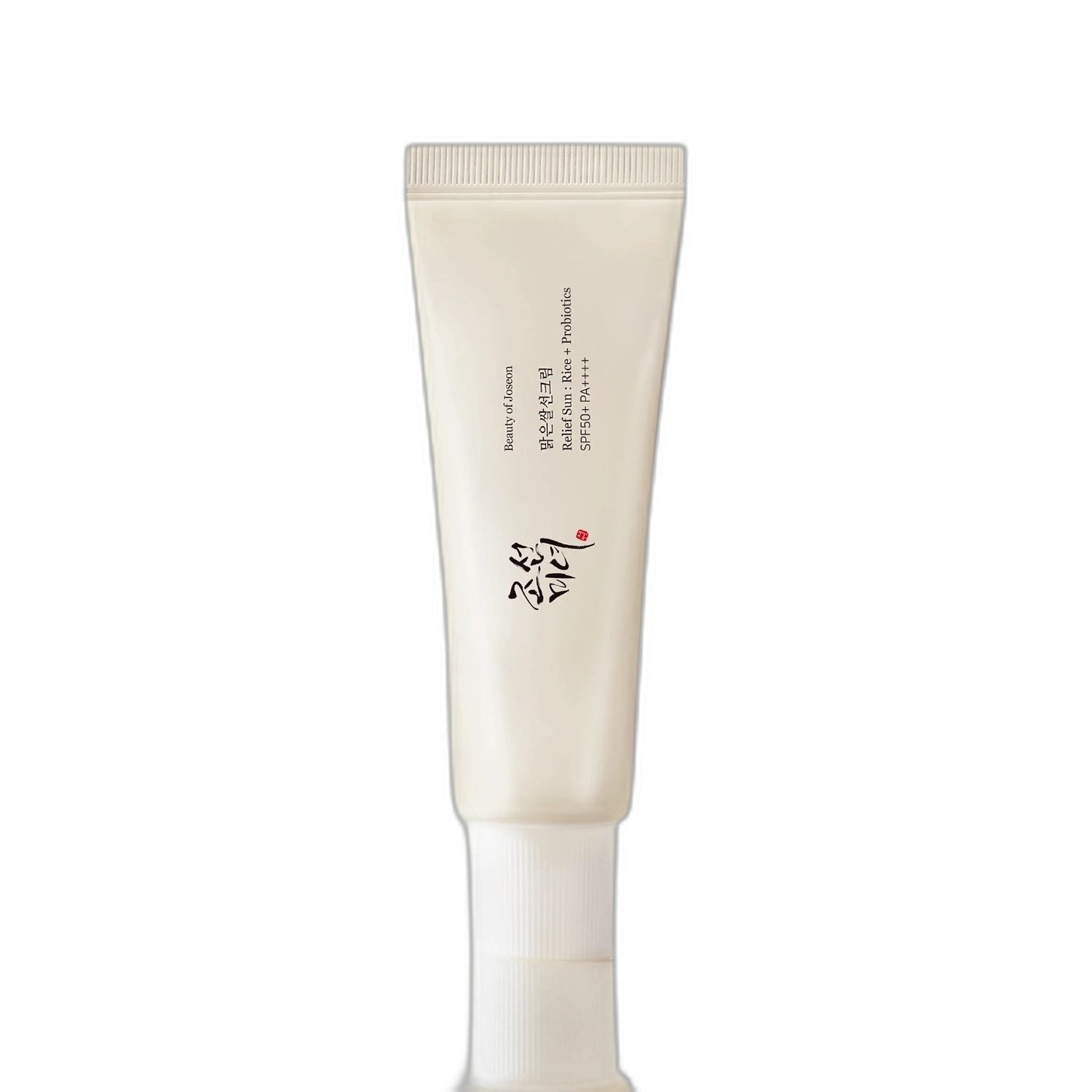
Beauty of Joseon Relief Sun: Rice + Probiotics
What the listing says. A chemical sunscreen with a comfortable, hydrating finish and no white cast, labelled SPF50+ PA++++.
What’s in it. The 2025 ingredient list includes diethylamino hydroxybenzoyl hexyl benzoate, ethylhexyl triazone, methylene bis-benzotriazolyl tetramethylbutylphenol (Tinosorb M, listed as nano) and diethylhexyl butamido triazone, plus niacinamide and rice extracts. There is no zinc oxide or titanium dioxide. INCIDecoder also keeps a 2023 list with the same filters, so check the box if the year matters to you.
Who it suits. Normal to dry skin that wants a daily chemical lotion. For a head-to-head with a lighter chemical serum, see Relief Sun vs SKIN1004 Hyalu-Cica Water-Fit Sun Serum.
Check Beauty of Joseon Relief Sun: Rice + Probiotics at Mirai
Beauty of Joseon Relief Sun Aqua-fresh Rice + B5
What the listing says. A lightweight, aqua-fresh chemical sunscreen, also SPF50+ PA++++, with no white cast.
What’s in it. The ingredient list is a different filter mix from the Rice + Probiotics lotion: ethylhexyl triazone, terephthalylidene dicamphor sulfonic acid (Mexoryl SX), drometrizole trisiloxane (Mexoryl XL), diethylamino hydroxybenzoyl hexyl benzoate and bis-ethylhexyloxyphenol methoxyphenyl triazine (Tinosorb S), plus rice seed water and panthenol.
Who it suits. Oily or combination skin that wants a fresher Relief Sun. The brand’s lighter positioning is not a guarantee it will stay matte all day. Details are in our oily-skin sunscreen guide.
Check Beauty of Joseon Relief Sun Aqua-fresh at Mirai
Round Lab Birch Juice Moisturizing Sunscreen
What the listing says. A moisture-essence sunscreen with birch sap and hyaluronic acid, for dryness as well as UVA and UVB. The product title lists SPF 50+, PA++++.
What’s in it. INCIDecoder has more than one list. One version includes diethylamino hydroxybenzoyl hexyl benzoate and bis-ethylhexyloxyphenol methoxyphenyl triazine. Another also lists ethylhexyl triazone, methylene bis-benzotriazolyl tetramethylbutylphenol and diethylhexyl butamido triazone. Check the box for the list that matches your bottle.
Who it suits. Dry or dehydrated skin that wants a moisturizing chemical sunscreen.
Check Round Lab Birch Juice Moisturizing Sunscreen at Mirai
SKIN1004 Madagascar Centella Air-Fit Suncream Plus
What the listing says. A lightweight, non-nano physical sunscreen with a natural tint and a smooth, matte finish, labelled SPF50+ PA++++.
What’s in it. The ingredient list has centella extract first, then zinc oxide and titanium dioxide. It also lists several essential oils, including bergamot fruit oil and rose flower oil. There are no modern chemical filters of the Uvinul or Tinosorb type on that list.
Who it suits. Anyone who wants a mineral option. Skip it if those essential oils bother you. SKIN1004’s lighter chemical alternative is the Hyalu-Cica Water-Fit Sun Serum, 50 ml, $23.84, labelled SPF50+ PA++++; we compare that serum with Relief Sun here.
Check SKIN1004 Air-Fit Suncream Plus at Mirai
Beauty of Joseon Daily Tinted Fluid and the Matte Sun Stick
The Daily Tinted Fluid, 50 ml, $25.95, is a mineral fluid the listing describes as having a sheer tint and zinc oxide, in 12 shades (all in stock at our check). The listing tells you to check the bottle for the SPF rating and full ingredient list. INCIDecoder has a page for a Broad Spectrum SPF30 PA+++ version, which may be a different market formula, so we are not attaching a single SPF figure here. The AAD notes that a tinted sunscreen with iron oxide can also help with visible light, which is separate from UV.
The Matte Sun Stick, 18 g, $29.95, is a chemical stick the listing rates SPF50+ PA++++ and positions for midday reapplication over makeup. Use a lotion or cream in the morning, then the stick for top-ups, and make several slow passes. See our sunscreen sticks guide for other finishes, including TOCOBO and Round Lab.
Browse all Korean sunscreens at Mirai
How to apply and reapply
The labeled SPF and PA ratings assume you use enough. The AAD’s how to apply sunscreen page says to put sunscreen on about 15 minutes before you go outside, to use at least 1 teaspoon for the face (about the length of your index and middle fingers) and about 1 ounce, a shot glass, for skin not covered by clothing, and to reapply every two hours outdoors and immediately after swimming or sweating. The FDA gives the same 15-minute, 1-ounce and two-hour guidance, and notes that no sunscreen is waterproof: a “water resistant” label should state 40 or 80 minutes.
A stick still needs enough product. Our sunscreen sticks guide covers how to make enough passes. A cushion or makeup SPF label is not a reason to skip a dedicated sunscreen layer.
Where a toner pad fits in the morning
A simple morning order is cleanse, optional toner pad, serum, then sunscreen. The pad is a measured swipe or a short mask; it does not replace SPF. If you exfoliate, do that on a schedule and give the sunscreen step the amount above.
Frequently asked questions
What is the best Korean sunscreen?
There isn’t one winner: pick by filter type, finish and skin type. A common everyday starting point is Beauty of Joseon Relief Sun: Rice + Probiotics, a chemical lotion labelled SPF50+ PA++++; oily skin may prefer the Aqua-fresh version, dry skin the Round Lab Birch Juice cream, and mineral fans the SKIN1004 Air-Fit Suncream Plus.
What does PA++++ mean on a Korean sunscreen?
It is the top UVA grade on the Japan Cosmetic Industry Association scale: a UVA protection factor (UVAPF) of 16 or more, measured with the ISO 24442 method. SPF on the same label is mainly about UVB.
Are Korean sunscreen filters approved in the US?
Some are, some are not. The FDA’s OTC Monograph M020, updated in 2026, added bemotrizinol, the filter also sold as Tinosorb S. Other filters used in several Korean formulas on this page, including Uvinul A Plus and Uvinul T 150, are not on that monograph list. A Korean sunscreen sold for another market is not a US OTC drug sunscreen.
How much Korean sunscreen should I apply?
The AAD recommends at least 1 teaspoon for the face, about 1 ounce for skin not covered by clothing, applied about 15 minutes before you go out, with a reapplication every two hours outdoors and after swimming or sweating.
Do Korean sunscreens leave a white cast?
Chemical formulas are less likely to, which is why many listings say they leave little or no cast; mineral formulas with zinc oxide or titanium dioxide can show more, especially on deeper skin tones, and a listing claim is not a test on every skin tone.
What is the difference between a chemical and a mineral Korean sunscreen?
A chemical sunscreen uses organic UV filters; a mineral or physical sunscreen uses zinc oxide, titanium dioxide or both; a hybrid uses both kinds. Texture and cast usually follow from that choice, not from the country on the label.
How often should I reapply Korean sunscreen?
The AAD and the FDA both say to reapply at least every two hours while you are outdoors, and more often after swimming or sweating. A high SPF does not let you wait longer.
Sources
- American Academy of Dermatology, How to apply sunscreen: https://www.aad.org/public/everyday-care/sun-protection/shade-clothing-sunscreen/how-to-apply-sunscreen
- American Academy of Dermatology, How to select a sunscreen: https://www.aad.org/public/everyday-care/sun-protection/shade-clothing-sunscreen/choosing-right-sunscreen
- U.S. Food and Drug Administration, Sunscreen: How to Help Protect Your Skin from the Sun: https://www.fda.gov/drugs/understanding-over-counter-medicines/sunscreen-how-help-protect-your-skin-sun
- U.S. Food and Drug Administration, Final Administrative Order OTC000039, Amending OTC Monograph M020 (issued 10 June 2026, effective 9 August 2026): https://www.accessdata.fda.gov/drugsatfda_docs/omuf/Order/OTC000039_Final_Administrative_Order.pdf
- Japan Cosmetic Industry Association, Standards and Related Notifications for SPF, UVA protection Grade (PA) and Water Resistance (uploaded 1 September 2022): https://www.jcia.org/en/common/download/top/jcia-notifications-spf-pa.pdf
- INCIDecoder ingredient lists, linked in each product section. Listing claims come from each Mirai product page.