Oily skin and sunscreen have a complicated relationship. Most sunscreens sit on top of oily skin like a greasy film, turning your face into a reflective surface by noon. Add a white cast on top of that, and you have a product that nobody wants to wear, no matter how important UV protection is.
Korean sunscreen formulators figured this out. The best K-beauty sunscreens for oily skin use lightweight textures, oil-absorbing ingredients, and modern UV filters that disappear on application. Sunscreen is, after all, the final and most important step in any Korean skincare routine. We tested 8 of them over the course of a month, and these are the ones that actually earned a permanent spot in our routines.
If your oily skin is also prone to active breakouts, see our dedicated Korean sunscreens for acne-prone skin guide for non-comedogenic and fungal-acne-safe picks. And if you are curious about why Korean SPF feels so different from what you find at the American drugstore, our breakdown of Korean SPF vs Western SPF filter chemistry explains exactly what the FDA gap means for your skin.
At a Glance: 8 Best Korean Sunscreens for Oily Skin
| Rank | Sunscreen | Texture | Finish | SPF | Approx. Price | Best For |
|---|---|---|---|---|---|---|
| 1 | Beauty of Joseon Relief Sun: Rice + Probiotics | Lightweight fluid | Natural, near-invisible | SPF 50+ PA++++ | $15 / 50ml | Overall winner — oily + all skin tones |
| 2 | COSRX Ultra-Light Invisible Sunscreen | Ultra-light, watery | Semi-matte | SPF 50+ PA++++ | $20 / 50ml | Hates the feel of sunscreen |
| 3 | Isntree Hyaluronic Acid Watery Sun Gel | Watery gel | Matte | SPF 50+ PA++++ | $23 / 50ml | Oily-dehydrated skin |
| 4 | Round Lab 1025 Dokdo Sunscreen | Light lotion, cooling | Semi-matte | SPF 50+ PA++++ | $18 / 50ml | Fragrance-free, hot days |
| 5 | Torriden DIVE IN Mild Suncream | Lightweight cream-gel | Semi-matte | SPF 50+ PA++++ | $22 / 60ml | Dehydrated oily skin |
| 6 | innisfree Tone Up No Sebum EX | Lightweight, tone-up | Most matte on the list | SPF 50+ PA++++ | $20 / 50ml | Maximum oil control |
| 7 | PURITO SEOUL Daily Soft Touch | Silky, primer-like | Soft-matte | SPF 50+ PA++++ | $20 / 60ml | Sunscreen + makeup base |
| 8 | Dr. Ceuracle 5a Control No Sebum | Thin lotion | Matte | SPF 50+ PA++++ | $24 / 50ml | Oily + acne-prone |
Quickest answer: start with Beauty of Joseon Relief Sun — it’s the best-selling and most recommended Korean sunscreen for oily skin, works on all skin tones with zero white cast, and costs around $15. If you need maximum oil control above all else, choose the innisfree No Sebum instead.
What Makes a Sunscreen Good for Oily Skin?
Before the rankings, here’s what we look for:
Lightweight texture. Gel, fluid, or water-based formulas absorb fast and don’t add weight. Heavy creams and lotions are out.
Matte or semi-matte finish. The sunscreen should control shine, not contribute to it. Some formulas include silica or other oil-absorbing powders that help.
No comedogenic ingredients. Oily skin is already prone to clogged pores. The sunscreen shouldn’t make it worse. Check for heavy silicones and coconut derivatives high on the ingredient list.
Modern UV filters. Newer-generation chemical filters (Tinosorb, Uvinul) provide broad-spectrum protection without the greasy feel of older filters. They’re widely approved in Korea but not yet in the US.
The 8 Best Korean Sunscreens for Oily Skin
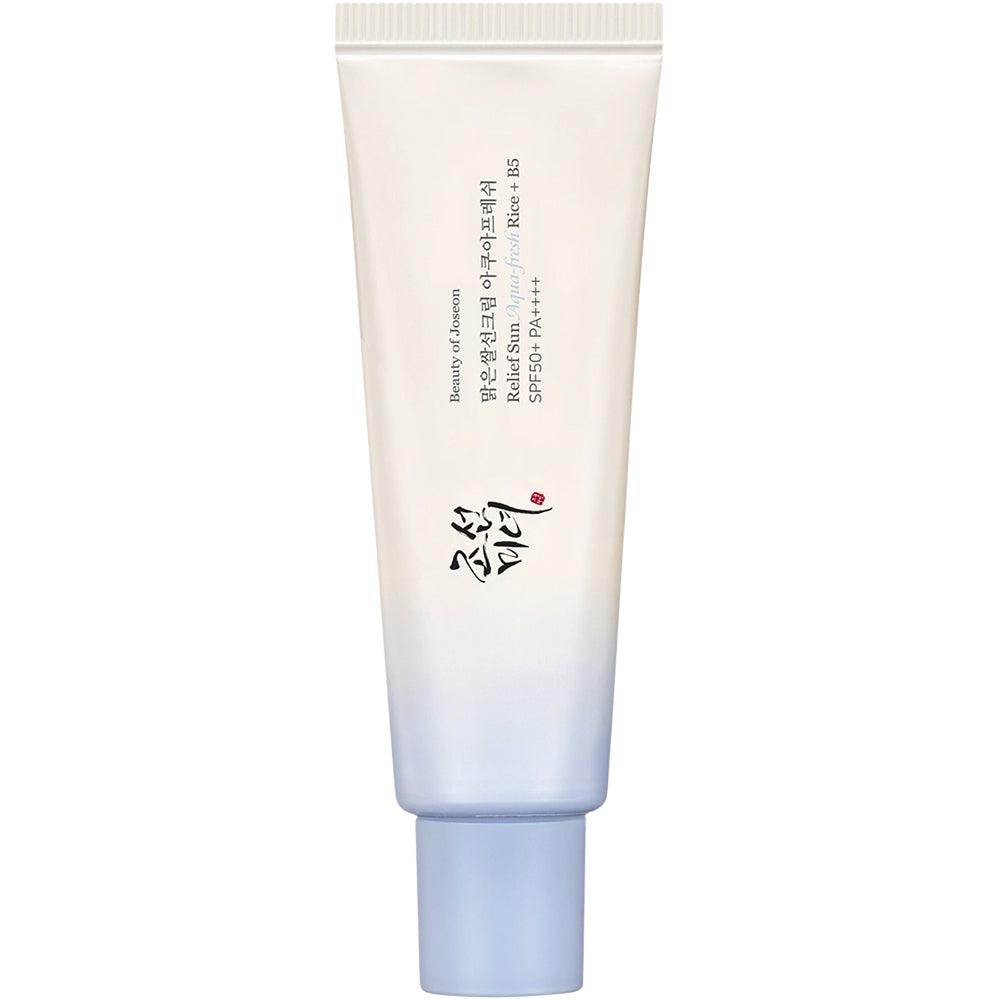
1. Beauty of Joseon Relief Sun: Rice + Probiotics SPF 50+ PA++++
Texture. Lightweight fluid that absorbs in seconds. Leaves a natural, barely-there finish. Shine control. Excellent. Our oiliest tester reported minimal breakthrough for 4 to 5 hours. White cast. Zero. Completely invisible across all skin tones.
This is the sunscreen we recommend most often, and for oily skin specifically, it’s hard to beat. The rice extract provides subtle brightening, and the probiotic complex supports the skin barrier without adding oil. At around $15 for 50ml, the value is exceptional. For an even closer look at the formula and why Korean dermatologists love it, see the in-depth Beauty of Joseon Relief Sun review on Mirai Skin.
2. COSRX Ultra-Light Invisible Sunscreen SPF 50+ PA++++
Texture. True to the name. Ultra-light, almost watery. Disappears on contact. Shine control. Very good. Sets to a semi-matte finish that doesn’t feel powdery or drying. White cast. None.
COSRX formulated this specifically for people who hate the feel of sunscreen. It genuinely feels like wearing nothing. The lightweight formula makes it an excellent base for makeup, and it layers well over serums and essences without pilling.
3. Isntree Hyaluronic Acid Watery Sun Gel SPF 50+ PA++++
Texture. Watery gel. Feels like a lightweight essence, not a sunscreen. Shine control. Excellent for a gel formula. Dries down matte within minutes. White cast. Absolutely none.
This is our top pick for oily skin that also tends toward dehydration. The hyaluronic acid provides hydration without heaviness, addressing that common oily-but-dehydrated problem. The gel texture absorbs instantly, and the matte finish lasts impressively long.
4. Round Lab 1025 Dokdo Sunscreen SPF 50+ PA++++
Texture. Light lotion with a watery quality. The Dokdo deep sea water gives it a fresh, cooling sensation. Shine control. Good. Slightly less matte than the Isntree but still well-controlled. White cast. None.
A solid all-rounder with the added benefit of mineral-rich deep sea water. Our team liked the fresh feel on hot days. It’s also fragrance-free, which matters for oily, reactive skin.
5. Torriden DIVE IN Mild Suncream SPF 50+ PA++++
Texture. Lightweight cream with a gel-like feel. Absorbs quickly. Shine control. Good. Semi-matte finish that stays comfortable all day. White cast. None.
Torriden makes some of the best hydrating products in K-beauty, and this sunscreen follows that pattern. It provides enough moisture to skip a separate moisturizer on oily skin during summer. The 60ml tube is also slightly larger than most competitors.
6. innisfree Tone Up No Sebum Sunscreen EX SPF 50+ PA++++
Texture. Lightweight with a slight tone-up effect. Blurs pores and evens skin tone. Shine control. Outstanding. The “No Sebum” branding is earned. This is the most mattifying option on the list. White cast. Minimal, and the slight tone-up effect compensates for it.
If oil control is your number one priority, this is the sunscreen to try. The mattifying effect is noticeable and lasts for hours. The trade-off is that it can feel slightly drying on combination skin during winter.
7. PURITO SEOUL Daily Soft Touch Sunscreen SPF 50+ PA++++
Texture. Silky, almost primer-like texture. Smooth and elegant. Shine control. Very good. Sets to a soft-matte, skin-like finish. White cast. None.
PURITO reformulated their sunscreen line and the results are impressive. This feels like a high-end makeup primer that happens to provide SPF 50+ protection. It sits under makeup beautifully and doesn’t ball up or pill, which is a common problem with oilier skin.
8. Dr. Ceuracle 5a Control No Sebum Sun Lotion SPF 50+ PA++++
Texture. Thin lotion that applies evenly and absorbs fast. Shine control. Excellent. Specifically formulated with sebum-controlling technology. White cast. None.
The least well-known product on this list, but it deserves more attention. Specifically designed for oily and acne-prone skin, with a focus on controlling excess sebum production throughout the day.
Tips for Wearing Sunscreen on Oily Skin
Even the best formula needs the right technique:
- Skip heavy moisturizer. If your sunscreen is hydrating enough (and most on this list are), you don’t need a separate moisturizer underneath. Less layers means less shine.
- Apply to clean, dry skin. Let your toner and serum absorb fully before sunscreen. Applying to damp skin can cause pilling and reduce the mattifying effect.
- Use the two-finger rule. A line of sunscreen along your index and middle fingers is the right amount for face and neck. Under-applying is the most common mistake.
- Set with powder if needed. A light dusting of translucent powder extends the matte effect by hours.
- Reapply with a sun stick. For midday touch-ups, a matte sunscreen stick lets you reapply without disturbing makeup or adding shine.
Why Korean Sunscreens Beat Western Ones for Oily Skin
The advantage comes down to UV filter approval. Korea and Japan have access to newer-generation chemical UV filters (Tinosorb S and M, Uvinul A Plus, Uvinul T 150) that the FDA hasn’t approved yet. These filters are lighter in texture, more photostable, less likely to feel greasy, and better at providing broad-spectrum protection.
Western sunscreens are largely stuck with older filters (avobenzone, octinoxate) or mineral filters (zinc oxide, titanium dioxide) that tend to be heavier and less elegant. The technology gap is real, and it’s the primary reason Korean sunscreens feel so much better on oily skin. We break down the full filter chemistry — and why UVA-I coverage is the gap most people don’t know about — in our Korean SPF vs Western SPF guide.
Our Top Pick
Start with the Beauty of Joseon Relief Sun. It’s affordable, invisible, lightweight, and works as well on oily skin as anything we’ve tested. If you need maximum oil control, the innisfree No Sebum is the one to try.
Either way, oily skin is no longer an excuse to skip sunscreen. These formulas prove that you can protect your skin from UV damage without looking or feeling like an oil slick by lunch.
If you run or exercise outdoors, protecting your skin during activity requires extra attention. See Korean Skincare for Runners on Rooted Glow for a complete guide to workout-proof sun protection.
Frequently Asked Questions
Do Korean sunscreens provide enough UV protection?
Yes. Korean sunscreens are tested to the same international standards (ISO 24444 for SPF, ISO 24442 for PA). Products rated SPF50+ PA++++ provide the highest level of both UVB and UVA protection available. Many use newer UV filters not yet approved in the US, which are more photostable and effective.
Can you wear Korean sunscreen under makeup?
Korean sunscreens are specifically designed to work under makeup. Most have lightweight, fast-absorbing textures that create a smooth base. Many Korean women use sunscreen as their makeup primer, and several products on this list double as both.
How often should you reapply sunscreen on oily skin?
Every 2 hours during direct sun exposure. For office days with minimal sun, a single morning application is generally sufficient. Use blotting papers first to remove excess oil, then reapply with a sunscreen stick or cushion compact to avoid disturbing makeup.
Why do Korean sunscreens feel lighter than Western ones?
Korea and Japan have access to newer-generation UV filters like Tinosorb S, Uvinul A Plus, and Uvinul T 150 that the FDA hasn’t yet approved. These filters are lighter, more photostable, and less greasy than the older filters (avobenzone, octinoxate) used in most Western sunscreens.
Which Korean sunscreen is best for oily skin?
The Beauty of Joseon Relief Sun SPF 50+ PA++++ is our top overall pick for oily skin. It absorbs in seconds, leaves zero white cast, and controls shine for 4-5 hours. If you need maximum oil control above all else, the innisfree Tone Up No Sebum Sunscreen is the most mattifying option available.
Do Korean sunscreens leave a white cast?
Most modern Korean sunscreens do not leave a white cast. They use newer chemical UV filters (Tinosorb, Uvinul) instead of the mineral filters (zinc oxide, titanium dioxide) that cause white cast in many Western sunscreens. All eight products on this list were tested across multiple skin tones with zero to minimal white cast.
Is Korean sunscreen better than American sunscreen?
For texture and wearability, yes. Korean sunscreens have access to newer-generation UV filters that the FDA hasn’t approved yet, which allows them to create lighter, less greasy formulas with equal or better UV protection. American sunscreens rely on older filters that tend to be heavier and leave more residue, making them less pleasant for daily wear.
How often should you reapply Korean sunscreen?
Reapply every 2 hours during direct sun exposure, just like any other sunscreen. For indoor or office days with minimal UV exposure, a single morning application is generally sufficient. On oily skin, blot excess oil first with blotting papers, then reapply using a sunscreen stick or cushion compact for convenience.