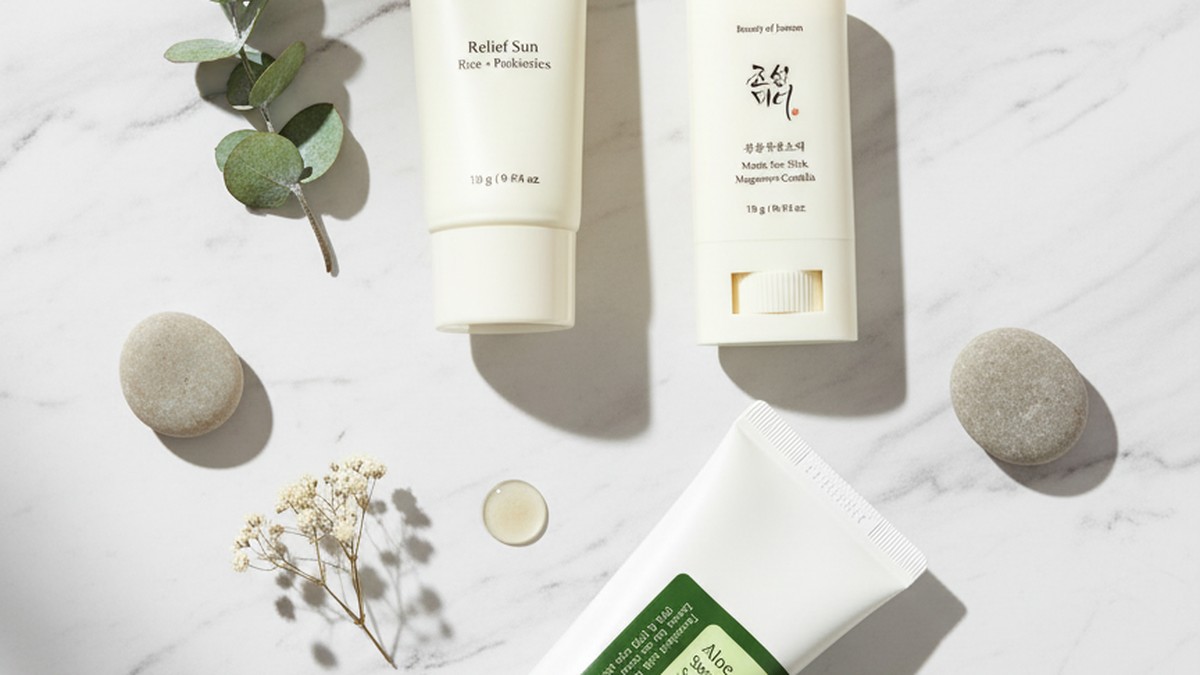
There is a specific feeling the first time someone with oily or combination skin tries a modern Korean sunscreen. The texture disappears on contact. There is no sticky film, no white cast, no sour chemical smell. It layers under makeup without pilling and you can reapply midday without your face turning into a slick. Then they go home, apply their usual American drugstore SPF, and wonder why it feels like a completely different category of product.
It is a different category. The gap between Korean and Western sunscreens is not marketing or hype — it is regulatory chemistry. Korean and Japanese formulators have access to a set of UV filters that the US FDA has not approved in nearly two decades, and that gap is widening. The newer filters are lighter, more photostable, and cover UVA-I better than anything most American brands can legally sell.
This guide unpacks the actual chemistry, which filters to look for, why the FDA gap exists, and what it means for day-to-day sun protection. If you are here looking for recommendations rather than chemistry, our best Korean sunscreens for oily skin and best acne-prone picks guides are the starting point.
The Short Version
Korean sunscreens generally outperform American sunscreens on cosmetic elegance and broad-spectrum UVA coverage, and match or beat them on SPF protection. European sunscreens are closer to Korean formulas because the EU has approved many of the same modern filters. The difference between “Korean SPF” and “Western SPF” is really the difference between filter systems that have been updated since 2006 (Korea, Japan, EU) and filter systems that have not (United States).
What Actually Blocks UV?
A sunscreen is only as good as the UV filters suspended inside it. Every other ingredient — water, glycerin, polymers, niacinamide, cica extract — contributes to feel, hydration, and marketing. The actual photoprotection comes from a small list of approved filter molecules.
There are two basic categories:
Mineral (physical) filters. Zinc oxide and titanium dioxide. They sit on the surface and reflect or absorb UV. Reliable, safe for sensitive skin, widely approved everywhere, but cosmetically heavy. They leave white cast on darker skin tones and feel thicker.
Chemical (organic) filters. Small molecules that absorb UV and dissipate the energy as heat. This is where the Korean-vs-Western gap lives. Modern chemical filters are lighter, invisible on all skin tones, and cover broader UV wavelengths. But individual countries decide which chemical filters are legal to sell.
The Filters You Will Find in Korean Sunscreens
Korea and Japan approve a list of next-generation chemical filters that Western consumers mostly can’t buy at home. Here are the important ones, and what they do:
Uvinul A Plus (Diethylamino Hydroxybenzoyl Hexyl Benzoate). A photostable UVA filter that covers the entire UVA-I range up to 400nm. This is the single filter that most clearly differentiates Korean and EU sunscreens from American ones — nothing in the FDA-approved list reaches this far into UVA-I with this kind of photostability. UVA-I is what drives deep dermal damage, photoaging, and some forms of pigmentation.
Tinosorb S (Bis-Ethylhexyloxyphenol Methoxyphenyl Triazine). A broad-spectrum filter that covers both UVA and UVB. Extremely photostable, meaning it doesn’t degrade in sunlight over the course of a day. Tinosorb S also stabilizes other filters, extending their effective lifetime.
Tinosorb M (Methylene Bis-Benzotriazolyl Tetramethylbutylphenol). A hybrid organic-particulate filter that both absorbs and scatters UV. Broad spectrum, photostable, and gives formulators a lot of flexibility in textures.
Uvinul T 150 (Ethylhexyl Triazone). A potent UVB filter — one of the most efficient UVB absorbers on the market. Allows formulators to reach SPF 50+ with a relatively low total filter load, which keeps textures light.
Uvasorb HEB (Diethylhexyl Butamido Triazone). Another powerful UVB filter used in combination with the above. Very stable, oil-soluble.
These five filters, in various combinations, power the best Korean and EU sunscreens. They are also the filters that make a Korean sunscreen feel lightweight, finish invisible, and protect against UVA at wavelengths that matter for photoaging.
What American Sunscreens Are Stuck With
The US FDA has not approved a new chemical UV filter since 1999. The last major regulatory update, the 2006 Final Monograph, added only avobenzone and ecamsule. Since then, the FDA has repeatedly delayed decisions on the modern filter list, citing the need for additional safety data that European regulators already accepted.
The result is that US sunscreens are built from an older toolkit:
Avobenzone (Butyl Methoxydibenzoylmethane). The main UVA filter available in US sunscreens. It is effective against UVA-I and UVA-II, but it is notoriously photounstable — it degrades when exposed to sunlight, losing protection over hours. To remain useful, it has to be paired with a stabilizer like octocrylene, which adds greasiness.
Octinoxate (Ethylhexyl Methoxycinnamate). UVB filter. Effective, but contributes to the oily, sticky feel typical of many American drugstore sunscreens. Also under scrutiny for coral reef impact.
Octisalate, Homosalate, Octocrylene. Supporting UVB filters and stabilizers. All contribute to texture heaviness and some have been flagged in recent systemic absorption studies.
Oxybenzone. Largely being phased out due to concerns about endocrine disruption and reef safety, but still present in some formulas.
Zinc oxide and titanium dioxide. The mineral workhorses. Modern micronized versions perform much better cosmetically than they did a decade ago, and many of the best US sunscreens lean heavily on zinc. But mineral filters still have a fundamental cosmetic ceiling — they cannot match the invisible, weightless feel of a well-formulated Tinosorb/Uvinul blend.
The practical effect is that American sunscreens have to work harder to reach the same protection level, and the formulas end up thicker, greasier, or require reapplication sooner because of avobenzone degradation.
UVA-I: The Coverage Gap Most People Don’t Know About
Sunburn is caused mostly by UVB. SPF measures UVB protection. That is why SPF 30 and SPF 50 dominate the conversation. But the radiation that drives deep skin aging, collagen breakdown, and melasma is UVA — specifically UVA-I, the longest wavelengths from roughly 340nm to 400nm.
UVA-I passes through clouds. It passes through most car and office windows. It is present all day, year-round, at a fairly constant level. It is the reason dermatologists tell indoor workers to still wear sunscreen.
Here is the key point: avobenzone, the main UVA filter in American sunscreens, covers UVA-I poorly and degrades throughout the day. Uvinul A Plus, available in Korean and EU sunscreens, covers UVA-I all the way to 400nm and remains photostable for the entire wear time.
If you care about photoaging, hyperpigmentation, or melasma, this coverage gap is the single most important reason to look at Korean or EU sunscreens. It is also why products that target hyperpigmentation work noticeably faster on users who have simultaneously upgraded their sunscreen.
SPF and PA: What the Labels Actually Mean
Korean sunscreens typically show two ratings side by side: SPF 50+ and PA++++.
SPF (Sun Protection Factor) measures UVB protection. The ”+” sign means the product tested above 50 but the label caps at 50+. Higher SPF numbers give diminishing returns — SPF 50 blocks roughly 98% of UVB, SPF 100 blocks about 99%.
PA (Protection Grade of UVA) is the Asian rating system for UVA protection, based on the PPD (Persistent Pigment Darkening) test. The scale runs PA+ to PA++++, with PA++++ being the highest grade and indicating PPD 16 or higher. Korean sunscreens at PA++++ are providing very strong UVA coverage, which is exactly where American sunscreens struggle.
The US does not use PA ratings. American sunscreens that pass a “broad spectrum” test qualify for that label, but the minimum bar is significantly lower than PA++++. A US “broad spectrum SPF 50” sunscreen can provide UVA protection that would only earn PA++ or PA+++ in the Asian system.
European Sunscreens: Closer to Korean Than American
If you are in Europe, most of your sunscreen options already use Tinosorb and Uvinul filters. EU regulators approved these filters in the early 2000s, and modern brands from La Roche-Posay, Bioderma, Avène, Eucerin, and others use them extensively.
The differences between the best EU and Korean sunscreens are smaller and come down mostly to formulation style: Korean sunscreens tend to have a lighter, gel-like, more primer-ready texture, while European sunscreens are often slightly heavier creams aimed at drier Northern European skin. Both use the same modern filter systems, so the UV protection is comparable.
American readers who want access to the best UV filters have two practical options: import Korean or Japanese sunscreens through retailers who stock them (see mirai-skin.com for our team’s picks), or pick up EU brands when traveling.
So What Should You Use?
There is no single right answer, but here is how I think about it:
- If you have oily, acne-prone, or combination skin: Korean sunscreens win decisively. The lightweight textures and non-comedogenic formulations are the best of any regional category. Start with the picks in our oily skin guide.
- If you have darker skin tones: Korean and EU sunscreens are a clear upgrade over most American options, because the modern chemical filters go invisible without the white cast of zinc and titanium.
- If you have dry or mature skin: EU sunscreens from the major dermatological brands are excellent, and many Korean sunscreens now include hydrating actives as well. Both are better than most US options at cosmetic elegance.
- If you have very sensitive skin or are pregnant/nursing and concerned about chemical filters: Mineral (zinc-based) sunscreens are the safest bet regardless of country, and some of the best mineral formulas come from both Korean and American brands.
- If you are photostability-conscious (long outdoor days): Korean or EU formulas with Tinosorb S and Uvinul filters hold up dramatically better over a day of sun exposure than US avobenzone-based formulas.
What’s Next in UV Filter Chemistry?
The US situation may improve. The SCREEN Act and subsequent FDA rulings have outlined a path for evaluating the modern filter list, but as of 2026 none of the next-generation filters have been approved for sale in the United States. European and Korean regulators continue to certify new formulations that push the cosmetic ceiling further — the latest Korean sunscreens feel closer to a moisturizer than a traditional SPF.
For now, the simplest way to wear a modern UV filter system is to buy from a brand based in a country that already approves them. That is the real meaning behind the “Korean SPF is better” meme circulating on beauty TikTok. It is not hype or packaging. It is two decades of regulatory divergence, compressed into the difference between a sunscreen you look forward to wearing and one you put off until you remember.
Frequently Asked Questions
Is Korean sunscreen actually better than American sunscreen?
For cosmetic elegance and UVA-I protection, yes. Korean sunscreens have access to modern UV filters like Uvinul A Plus, Tinosorb S, and Tinosorb M that the FDA has not approved for US sunscreens since 1999. These filters are lighter, more photostable, and protect against longer UVA wavelengths that drive photoaging. American sunscreens rely on older filters like avobenzone that degrade during the day.
Why hasn’t the FDA approved Tinosorb and Uvinul filters?
The FDA classifies sunscreen active ingredients as over-the-counter drugs and requires extensive safety data before approval. European and Asian regulators classify sunscreens as cosmetics, which has a lower evidentiary bar. The 2014 Sunscreen Innovation Act required the FDA to review modern filters, but the agency repeatedly requested additional safety data. As of 2026, no new chemical UV filters have been approved in the United States.
What is Uvinul A Plus and why does it matter?
Uvinul A Plus (Diethylamino Hydroxybenzoyl Hexyl Benzoate) is a UVA filter that covers the UVA-I range up to 400nm with high photostability. This is the part of the UV spectrum that drives deep dermal aging and hyperpigmentation. No FDA-approved chemical filter covers UVA-I as effectively or as stably, which is the main reason Korean and EU sunscreens are considered superior for anti-aging purposes.
Are European sunscreens as good as Korean ones?
Yes, for UV protection. European sunscreens use most of the same modern filters as Korean ones, including Tinosorb S, Tinosorb M, Uvinul A Plus, and Uvinul T 150. The differences come down to formulation style rather than protection — Korean sunscreens tend to have lighter, more primer-like textures, while European sunscreens often lean toward richer creams for drier skin.
Can you import Korean sunscreen to the US?
Yes, through retailers that stock Korean and Japanese beauty products. The FDA does not prohibit personal import of foreign sunscreens — it prohibits domestic manufacturers from using non-approved filters. You can legally buy and use Korean sunscreens, you just can’t find them on most US drugstore shelves.
Does SPF 100 protect more than SPF 50?
Only marginally. SPF 50 blocks approximately 98% of UVB radiation, and SPF 100 blocks about 99%. The jump from SPF 15 to 30 to 50 matters; beyond 50 the returns are diminishing. More important than chasing SPF numbers is using a sunscreen with strong UVA coverage (PA++++ or equivalent) and reapplying every two hours.
What is the difference between PA++++ and “broad spectrum”?
PA++++ is the Asian rating for the highest level of UVA protection, based on the PPD (Persistent Pigment Darkening) test. “Broad spectrum” is the US FDA label for any sunscreen that meets a minimum UVA protection threshold. A PA++++ sunscreen typically provides substantially more UVA protection than a US broad-spectrum SPF 50.
For a full summer routine strategy — how humidity changes your layering, when to switch products, and how to reapply over makeup — our Korean skincare summer 2026 guide covers the seasonal adjustments that make your SPF routine work harder.