Eating vitamin C can raise vitamin C levels in your skin, especially if your intake was low to begin with. A vitamin C serum takes a different route, applying it directly to the surface, so the two complement each other rather than compete, and neither replaces sunscreen.
How vitamin C gets into skin
The Linus Pauling Institute at Oregon State University explains that vitamin C in the skin is normally transported from the bloodstream, with transport proteins on cells in every layer. It adds that oral vitamin C effectively increases skin levels, but once blood levels are saturated, skin levels stop rising. The optimum level for skin isn’t yet known.
A serum skips the bloodstream. The LPI says topical ascorbic acid can cross the epidermis into the deeper layers, and that how much gets in depends on the formula, especially its pH and concentration.
The 2025 kiwifruit study, explained
In October 2025 the Journal of Investigative Dermatology published a study from the University of Otago (Pullar and colleagues) on vitamin C from kiwifruit and skin. It ran in two stages.
- Stage 1 was cross-sectional. Researchers compared skin and blood samples from people having elective surgery.
- Stage 2 was a before-and-after pilot. Adults recruited for low starting vitamin C status ate 2 SunGold kiwifruit a day, about 250 mg of vitamin C, for 8 weeks. It ran at two sites, Christchurch and Hamburg, with 12 healthy adults at each.
What it found. Skin vitamin C went up. In the per-protocol group (people whose blood levels rose), skin density measured by ultrasound rose from 0.154 to 0.228 scanner units. The authors link skin density to collagen. Epidermal cell proliferation, measured by the marker Ki-67, rose from 21.06 to 27.42.
What the study didn’t show
- Procollagen type I peptide, a direct marker of new collagen, did not change.
- UVA protection did not change.
- Elasticity fell slightly, by about 7%.
- There was no control group, and each site had only 12 people, all recruited for low vitamin C.
- The study was funded by Zespri, the kiwifruit company, with a University of Otago grant.
The university’s press release is headlined “boosts collagen levels”. That goes further than the paper’s own measures. The fair summary: skin vitamin C and skin density rose in people who started out low.
What topical vitamin C research shows
The LPI’s review makes three points about serums:
- Form. Ascorbic acid (L-ascorbic acid), the natural form, is described as the most effective for topical use.
- pH and concentration. In animal studies, absorption depended on pH, with formulas below pH 4.0 helping it get in. Absorption peaked with a 20% solution, and higher concentrations absorbed less. Similar human studies are still needed.
- Stability. Air, heat and light slowly break vitamin C down, so packaging and storage matter.
The LPI also notes that vitamin C is not a sunscreen, because it doesn’t absorb UVA or UVB light. Its role is antioxidant.
Food vs serum
| Route | Reaches | Evidence quality | Cost | Who it suits |
|---|---|---|---|---|
| Food (fruit and vegetables) | Whole body, skin via the blood; levels plateau once blood is saturated | Small human studies, including the 2025 kiwifruit pilot | Part of your groceries | Everyone, especially people with low intake |
| Serum (L-ascorbic acid) | Skin surface and the layers below, depending on the formula | Mostly lab and animal absorption work; the LPI says similar human studies are still needed | $22.80 to $31.20 for the serums below | People who want a targeted skincare step and can store it well |
Our reading of the evidence in this table is editorial, based on the LPI review and the kiwifruit paper.
Using food and serum together
They don’t compete. Food keeps your overall vitamin C status up, and the kiwifruit study tested people who started out low. A serum adds vitamin C directly where you apply it. Neither replaces sunscreen: the LPI notes that in two human studies, oral vitamin C alone didn’t significantly raise a measure of sunburn protection. For more on SPF, see Korean SPF vs Western SPF.
Choosing a Korean vitamin C serum
Check the form and the percentage on the label. Then pick a small bottle you’ll finish before it oxidizes. Our vitamin C Korean skincare guide covers picks and how to use them. Niacinamide vs vitamin C and the ingredient compatibility guide cover layering. If uneven tone is your goal, see how to fade dark spots.
This post contains affiliate links; we may earn a commission at no cost to you.
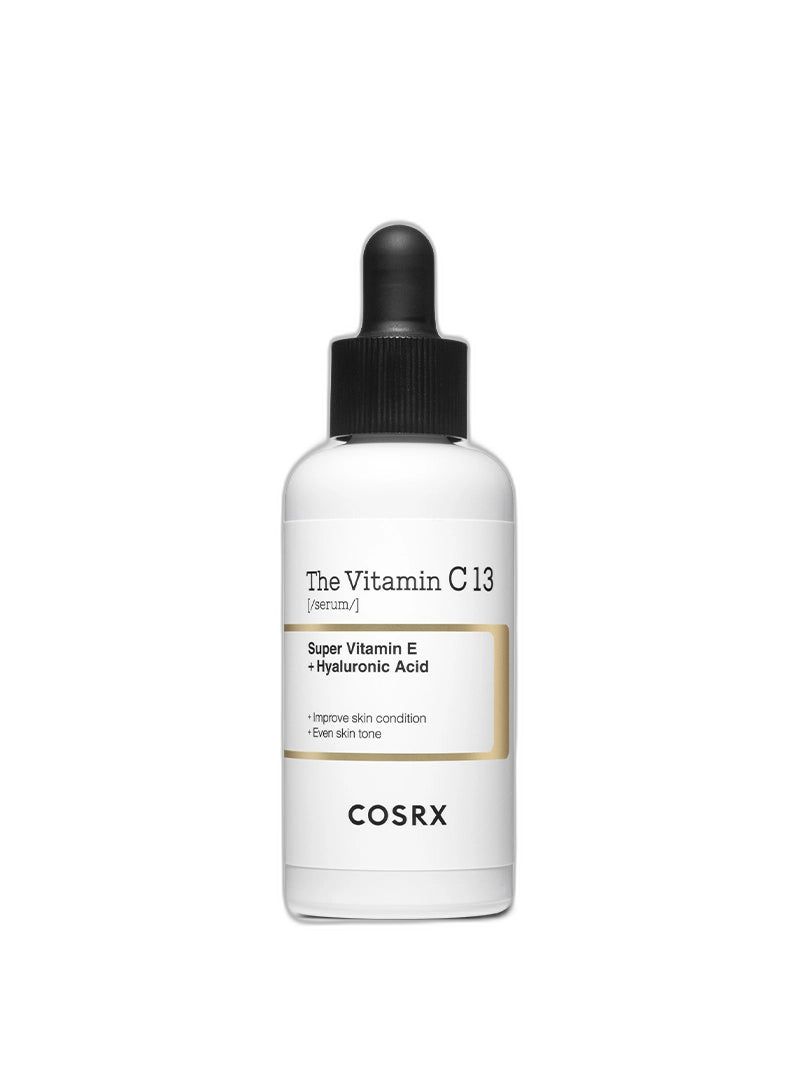
- COSRX The Vitamin C 13 Serum, 20 ml, $22.80. The ingredient list shows ascorbic acid at 13%, second on the list, plus 3-O-ethyl ascorbic acid and tocopherol.
- COSRX The Vitamin C 23 Serum, 20 ml, $26.95. The listing describes a water-free serum with 23% L-ascorbic acid and vitamin E (tocopherol). INCIDecoder’s ingredient list also shows 23% ascorbic acid but lists water first, so check the box.
- Isntree Hyper Vitamin C23 Serum, 20 ml, $28.07. The listing says 23% L-ascorbic acid. INCIDecoder has no page for it, so we couldn’t confirm the full list.
- PURITO Pure Vitamin C Serum, 60 ml, $31.20. The listing says 5% ascorbic acid, and INCIDecoder’s ingredient list agrees. It’s the lowest strength here.
Prices are Mirai’s on 5 November 2026 and can change. The COSRX 23 listing says mild tingling is common at that strength, so a lower percentage is a gentler start. Patch-test first. For vitamin C from food and what the 2025 kiwifruit study found, see Rooted Glow’s kiwi benefits for skin.
Browse vitamin C serums at Mirai
Frequently asked questions
Does eating vitamin C help your skin?
It can raise vitamin C levels in skin, especially if your intake was low; in a 2025 pilot study, two SunGold kiwifruit a day for 8 weeks raised skin vitamin C, and skin density in a subgroup, in adults with low starting levels, though it was small and had no control group.
Is a vitamin C serum better than eating vitamin C?
Neither is simply better: food raises skin levels through the blood until blood levels plateau, while a serum applies vitamin C directly, with absorption depending on its form, pH and concentration.
How much vitamin C reaches the skin from food?
There’s no fixed figure; the Linus Pauling Institute says oral vitamin C raises skin levels until blood levels are saturated, and the optimum level for skin isn’t yet known.
Do two kiwis a day improve skin?
In the 2025 pilot, 2 SunGold kiwifruit a day for 8 weeks raised skin vitamin C in 24 adults with low starting levels, and skin density rose in the per-protocol group at the German site, but a direct marker of new collagen didn’t change, elasticity fell slightly, and there was no control group.
Should I use vitamin C serum and eat vitamin C-rich foods?
You can do both, since they work by different routes, and a diet with fruit and vegetables supports your overall vitamin C status whether or not you use a serum.
Does oral vitamin C replace sunscreen?
No: vitamin C doesn’t absorb UV light, and the Linus Pauling Institute notes oral vitamin C alone didn’t significantly raise sunburn protection in two human studies, so keep using SPF.
Sources
- Pullar JM, Bozonet SM, Segger D, von Seebach A, Vlasiuk E, Morrin HR, Pearson JF, Simcock J, Vissers MCM. Improved Human Skin Vitamin C Levels and Skin Function after Dietary Intake of Kiwifruit: A High-Vitamin-C Food. Journal of Investigative Dermatology, published online 28 October 2025. DOI: 10.1016/j.jid.2025.10.587
- University of Otago, “Vitamin C from food boosts collagen levels in skin – landmark study” (press release): https://www.otago.ac.nz/news/newsroom/vitamin-c-from-food-boosts-collagen-levels-in-skin-landmark-study
- Linus Pauling Institute, Oregon State University. Vitamin C and Skin Health: https://lpi.oregonstate.edu/mic/health-disease/skin-health/vitamin-C
- INCIDecoder ingredient lists, linked above. Listing claims come from each Mirai product page.