You spent twenty minutes on your makeup this morning. Foundation, concealer, setting powder. And when you looked in the mirror under natural light, every dry patch on your face was screaming. The foundation clung to flakes around your nose. Concealer settled into the dry creases around your mouth. Your cheeks looked like cracked earth under a layer of paint.
So you added more product. More concealer, more setting spray. It got worse. It always gets worse.
Here’s what every makeup artist knows but few people talk about: when skin is flaking under makeup, the problem isn’t your foundation. The problem is the skin underneath. No primer, no technique, and no product will create a smooth canvas on a surface that’s actively shedding. You have to fix the skin first.
Why Dry Patches Happen
Dry patches aren’t just about “dry skin type.” People with oily and combination skin get them too — especially around the nose, between the eyebrows, and along the jawline. Here’s what’s actually going on.
Your moisture barrier is compromised. Your skin’s outermost layer — the stratum corneum — is a barrier made of dead skin cells (corneocytes) held together by a mortar of ceramides, cholesterol, and fatty acids. When this mortar breaks down, water escapes from the skin faster than it should. This is called transepidermal water loss (TEWL), and it’s the root cause of most dry, flaky patches.
What damages the barrier:
- Over-cleansing or using high-pH cleansers that strip natural oils
- Over-exfoliating with acids or retinol (see our guide on recovering from retinol damage if this sounds familiar)
- Cold, dry weather pulling moisture from the skin
- Hot showers (the heat dissolves the lipid barrier)
- Certain medications (retinoids, isotretinoin, diuretics)
- Central heating and air conditioning reducing ambient humidity
The flaking cycle: When the barrier is compromised, skin cells shed unevenly instead of the smooth, invisible turnover that happens on healthy skin. These unevenly shed cells create visible flakes. Makeup grabs onto these flakes and makes them dramatically more visible. You try to exfoliate the flakes away, which further damages the barrier, which creates more flaking. It’s a vicious cycle.
The 3-Day Emergency Rescue
If you have an event, a meeting, or a date and your skin is currently flaking, this 72-hour protocol will get you presentable. It won’t fully repair the barrier (that takes 2-4 weeks), but it will significantly reduce visible flaking.
Day 1-3 Evening Routine
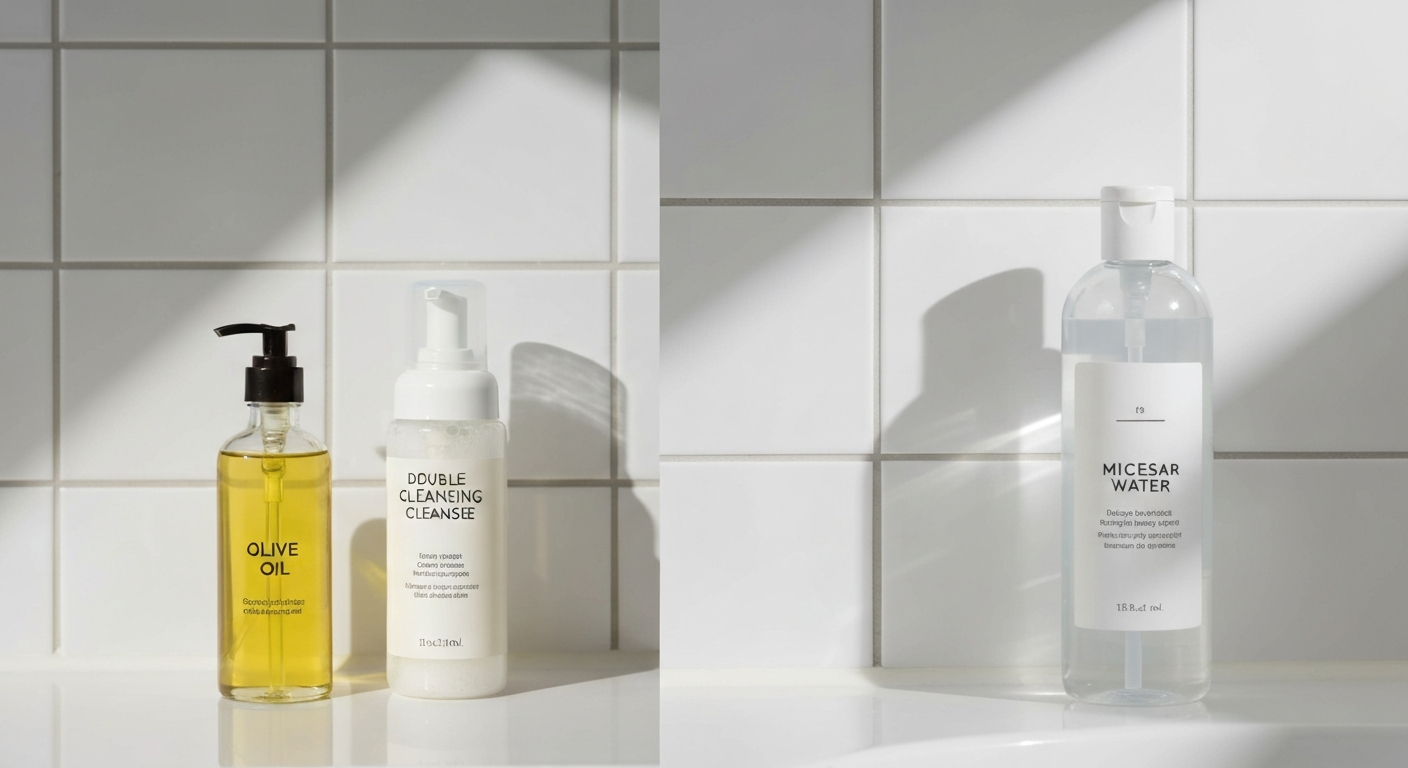
Step 1: Gentle cleanser only. No double cleanse, no micellar water, no cleansing brush. Use a cream or milk cleanser at a low pH. Gel cleansers can be too stripping right now.
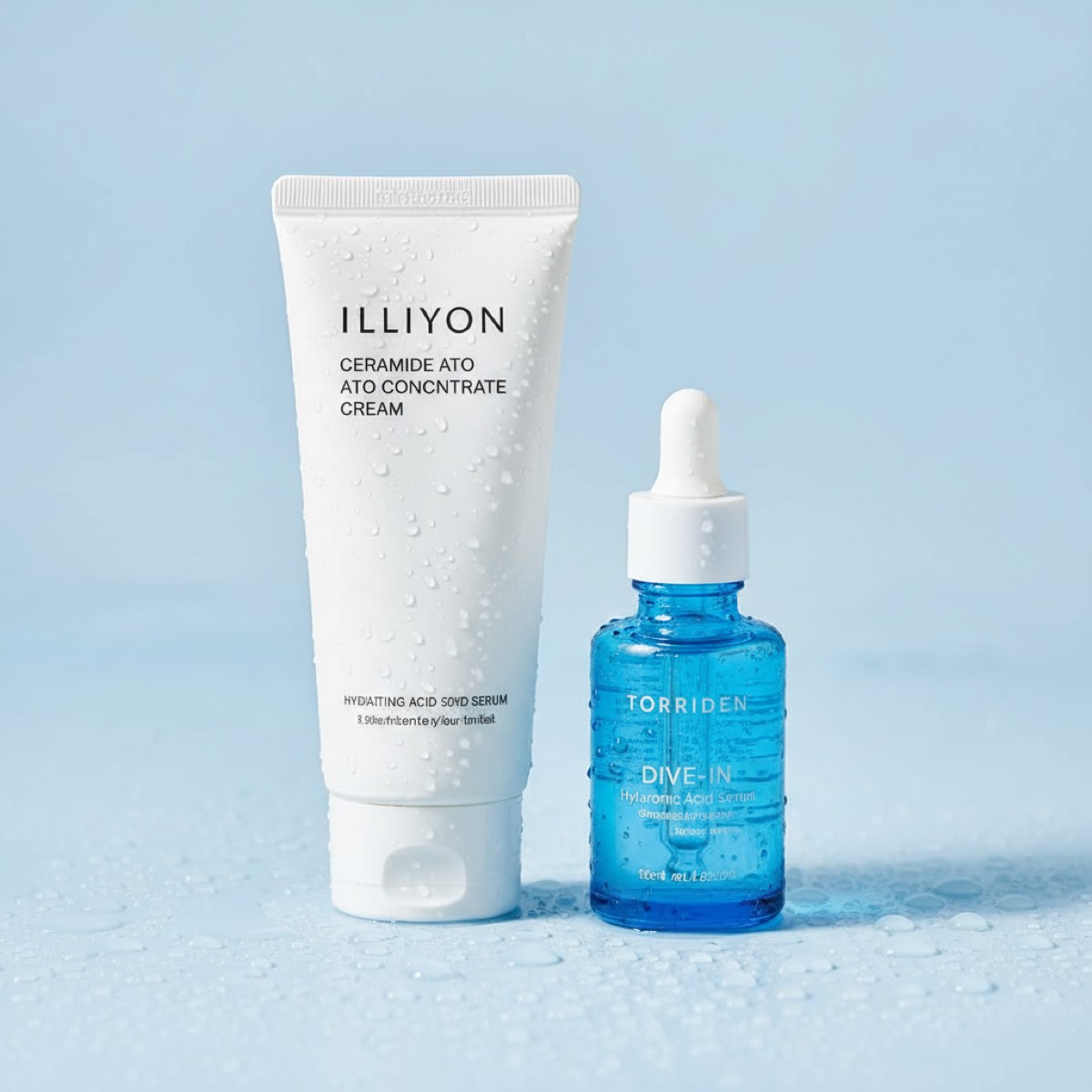
Step 2: Hyaluronic acid serum on damp skin. The Torriden DIVE-IN Low Molecular Hyaluronic Acid Serum uses multi-weight hyaluronic acid that penetrates different layers of the skin. The key is applying to damp skin — hyaluronic acid pulls moisture from whatever source is available. On damp skin, it pulls water in. On dry skin, it can actually pull moisture out of the deeper layers, making things worse.
Shop Torriden DIVE-IN Hyaluronic Acid Serum →
Step 3: Snail mucin. Layer the COSRX Advanced Snail 92 All in One Cream on top. Snail mucin contains glycoprotein enzymes, hyaluronic acid, glycolic acid, and antimicrobial peptides. It creates a moisture-locking film over the skin while actively promoting wound healing. For dry, compromised skin, it’s one of the most effective single ingredients available.
Shop COSRX Snail 92 All in One Cream →
Step 4: Ceramide cream seal. Lock everything in with a ceramide-rich cream. The Illiyoon Ceramide Ato Concentrate Cream is a powerhouse — originally formulated for atopic dermatitis (eczema), it contains ceramides that are structurally identical to the ones in your skin barrier. This is the “mortar” you’ve been losing. It also forms a breathable occlusive layer that prevents the moisture underneath from evaporating overnight.
Shop Illiyoon Ceramide Ato Concentrate Cream →
Step 5: Sleeping mask. For the first three nights, add a sleeping mask as the final layer. The Laneige Cream Skin Mask adds another layer of occlusion and hydration that works while you sleep. It’s like wrapping your skin in a moisture cocoon for eight hours.
Shop Laneige Cream Skin Mask →
Day 1-3 Morning Routine
- Splash with lukewarm water (no cleanser — don’t wash off the overnight moisture)
- Torriden DIVE-IN serum on damp skin
- Moisturizer — the Anua Heartleaf 70% Soothing Cream is perfect for daytime. It’s hydrating without being heavy enough to interfere with makeup, and heartleaf reduces any redness from the compromised barrier.
- Sunscreen (barrier-compromised skin is more photosensitive)
Shop Anua Heartleaf 70% Soothing Cream →
The Long-Term Barrier Repair Routine
The 3-day rescue gets you through the immediate crisis. Actual barrier repair takes 2-4 weeks of consistent, gentle care. For a more comprehensive understanding of ceramides and barrier repair, see our ceramide creams guide.
Morning:
- Gentle cleanser or water rinse
- Hydrating toner (pat in, don’t swipe with cotton)
- Torriden DIVE-IN serum
- Anua Heartleaf Soothing Cream
- Sunscreen
Evening:
- Gentle cleanser (double cleanse only if you wore heavy makeup/sunscreen)
- Hydrating toner
- COSRX Snail 92 Cream
- Illiyoon Ceramide Ato Concentrate Cream
Weekly: Laneige Cream Skin Mask 2-3 nights per week as a sleeping pack
Products to avoid during repair (this is hard but important):
- All chemical exfoliants (AHA, BHA, PHA) — resume after barrier is healed
- Retinol/retinoids — pause until flaking resolves completely
- Vitamin C (pure ascorbic acid) — too acidic for compromised skin
- Clay masks — they absorb oil you can’t afford to lose right now
- Alcohol-heavy toners and astringents
- Physical scrubs
Products That Make Dry Patches Worse
Some products marketed for “dry skin” are actually counterproductive.
Thick, occlusive moisturizers without ceramides. Petroleum jelly and mineral oil lock in moisture, but they don’t repair the barrier. If there’s no moisture to lock in (because your barrier has been leaking for weeks), occlusion alone won’t fix the problem. You need barrier-repairing ingredients underneath.
Heavily fragranced “nourishing” creams. Fragrance is one of the most common irritants in skincare. On compromised skin, it can cause stinging, redness, and further barrier disruption. Avoid during the repair phase.
Foaming cleansers. Sulfates and other surfactants that create foam strip lipids from the skin. During barrier repair, switch to cream, milk, or oil cleansers that clean without stripping.
Over-the-top layering. Ten steps of product can actually suffocate damaged skin. Keep it simple during the repair phase. A proper Korean skincare routine doesn’t mean you need every step every day.
Makeup Tips for Dry Skin
While your skin heals, you still need to face the world. Here’s how to make makeup work on skin that isn’t cooperating.
Prep is everything. Apply your hydrating skincare 10-15 minutes before makeup. Let each layer absorb fully. Rushing this creates pilling under foundation.
Use a hydrating primer, not a pore-filling one. Silicone-based primers sit on top of flakes and accentuate them. Look for water-based, glycerin-rich primers that hydrate the surface.
Apply foundation with a damp beauty sponge. A dampened sponge presses product into the skin rather than dragging it across flakes. Stipple, don’t swipe.
Choose cream or liquid products. Powder foundation, powder blush, and setting powder all cling to dry patches. Switch to cream formulas until your skin heals.
Set strategically. If you must use setting powder, apply it only to areas that get oily (T-zone). Keep it away from dry patches entirely.
Facial mist over makeup. A hydrating mist sprayed over finished makeup can revive dry areas throughout the day without disrupting your look.
Frequently Asked Questions
How long does it take to repair a damaged moisture barrier?
A mildly compromised barrier (light flaking, some tightness) can recover in 1-2 weeks with consistent ceramide-based care. A severely damaged barrier (widespread flaking, stinging on product application, visible redness) takes 4-8 weeks. During recovery, resist the urge to add actives back into your routine. Let the barrier heal fully before reintroducing exfoliants or retinol.
Can I exfoliate dry patches away?
It’s tempting, but no — not while the barrier is damaged. Exfoliation removes the top layer of skin cells, and on compromised skin, those cells are desperately trying to hold moisture in. Removing them accelerates water loss and worsens flaking. Once the barrier is repaired (no more tightness or stinging), you can reintroduce gentle chemical exfoliation 1-2 times per week.
Why do I have dry patches even though my skin is oily?
You likely have dehydrated skin, not truly dry skin. Dehydration means lack of water, not lack of oil. Your skin can overproduce oil (oily type) while simultaneously losing water through a compromised barrier. The treatment is the same: hydrating layers (hyaluronic acid, snail mucin) sealed with a barrier-repairing cream. Learn more about identifying your skin type.
Should I use a humidifier?
Yes, especially if you live in a dry climate or use central heating/AC. A humidifier in your bedroom keeps ambient moisture levels up overnight, reducing TEWL while you sleep. Your skin does most of its repair work at night — giving it a moisture-rich environment dramatically speeds recovery.
My dry patches come back every winter — how do I prevent them?
Transition your routine in early autumn before cold weather hits. Add a ceramide cream (Illiyoon is excellent year-round) and switch from gel to cream cleanser. Use a sleeping mask 2-3 nights per week through winter. Avoid long hot showers. These preventive steps keep the barrier intact so you don’t end up in a repair cycle every January.
If you’re also dealing with dry, damaged hair alongside dry skin — a common combination in winter — our Korean hair care products for damage repair guide covers the best K-beauty bonding treatments and repair serums.