Chemical exfoliants are the backbone of effective Korean skincare. They dissolve dead skin cells, unclog pores, improve texture, and boost the effectiveness of every product that follows them. But choosing between AHA, BHA, and PHA can be confusing when each one claims to solve everything.
They’re not interchangeable. Each acid works differently, penetrates to different depths, and targets different concerns. Here’s exactly how to choose.
AHA (Alpha Hydroxy Acid)
What It Is
AHAs are water-soluble acids derived from natural sources. The most common ones in Korean skincare are glycolic acid (from sugar cane), lactic acid (from milk), and mandelic acid (from almonds).
How It Works
AHAs work on the skin’s surface. They dissolve the bonds between dead skin cells, allowing them to shed more efficiently. This reveals the fresher, brighter skin underneath.
Best For
- Dull, uneven skin tone. AHAs are the best exfoliant for brightening.
- Sun damage and dark spots. By speeding up cell turnover, AHAs help fade hyperpigmentation.
- Dry or normal skin. AHAs also have humectant properties, meaning they attract moisture to the skin.
- Fine lines. Surface-level exfoliation smooths the appearance of fine wrinkles.
Not Ideal For
- Oily, acne-prone skin (BHA is better for this)
- Very sensitive skin (PHA is gentler)
Our AHA Pick
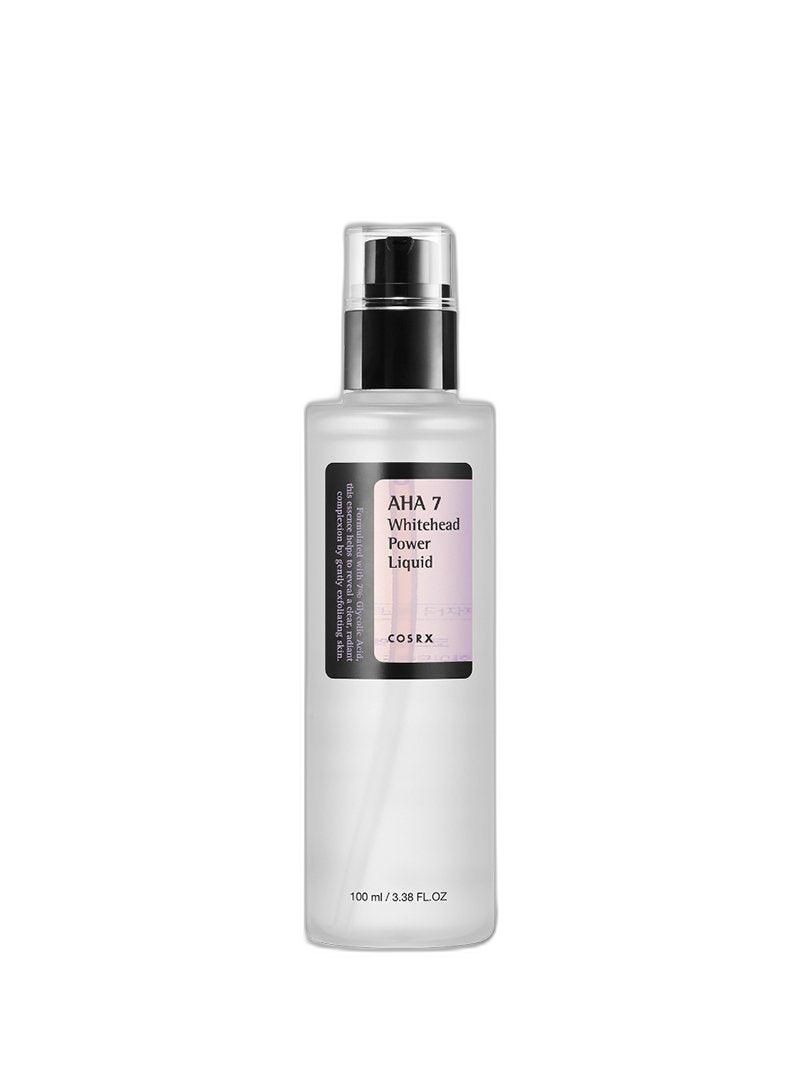
COSRX AHA 7 Whitehead Power Liquid. 7% glycolic acid at an optimal pH for effectiveness. A K-beauty classic that’s been a staple in routines for years. Use 2 to 3 times per week in the evening, after cleansing.
BHA (Beta Hydroxy Acid)
What It Is
BHA in skincare almost always means salicylic acid (or its Korean counterpart, betaine salicylate). It’s oil-soluble, which is the key difference from AHA.
How It Works
Because BHA is oil-soluble, it can penetrate into pores through the oil and sebum. It doesn’t just work on the surface; it cleans inside the pore itself. It dissolves the mix of dead skin cells and sebum that causes blackheads, whiteheads, and acne.
BHA also has anti-inflammatory properties, making it calming for irritated, acne-prone skin.
Best For
- Acne-prone skin. BHA is the gold standard exfoliant for acne.
- Blackheads and clogged pores. It works inside the pore where the blockage is.
- Oily skin. BHA helps regulate oil production.
- Enlarged pores. By keeping pores clean, BHA makes them appear smaller.
Not Ideal For
- Dry skin (can be drying if overused)
- Skin that just needs surface brightening (AHA is better)
Our BHA Pick
Isntree Chestnut BHA 0.9% Clear Toner. A gentle daily BHA toner with chestnut shell extract. The 0.9% concentration is low enough for daily use but effective enough to keep pores clear. For a stronger treatment, the COSRX BHA Blackhead Power Liquid (4% betaine salicylate) works well 2 to 3 times per week.
PHA (Polyhydroxy Acid)
What It Is
PHAs are the newest generation of chemical exfoliants. The most common ones are gluconolactone and lactobionic acid. They have a larger molecular structure than AHAs, which changes how they interact with the skin.
How It Works
PHAs work on the skin surface like AHAs, but the larger molecules mean they penetrate more slowly and less deeply. This makes them significantly gentler while still providing exfoliation.
PHAs also have antioxidant and moisture-binding properties. They strengthen the skin barrier rather than compromising it.
Best For
- Sensitive skin. PHAs are the go-to exfoliant for reactive, easily irritated skin.
- Rosacea-prone skin. Gentle enough to use without triggering flare-ups.
- Retinol users. If you’re already using retinol, a PHA is a safer exfoliation addition than AHA or BHA.
- Beginners. If you’ve never used chemical exfoliants, PHA is the safest starting point.
Not Ideal For
- Stubborn acne (BHA is more effective)
- Significant hyperpigmentation (AHA works faster)
Our PHA Pick
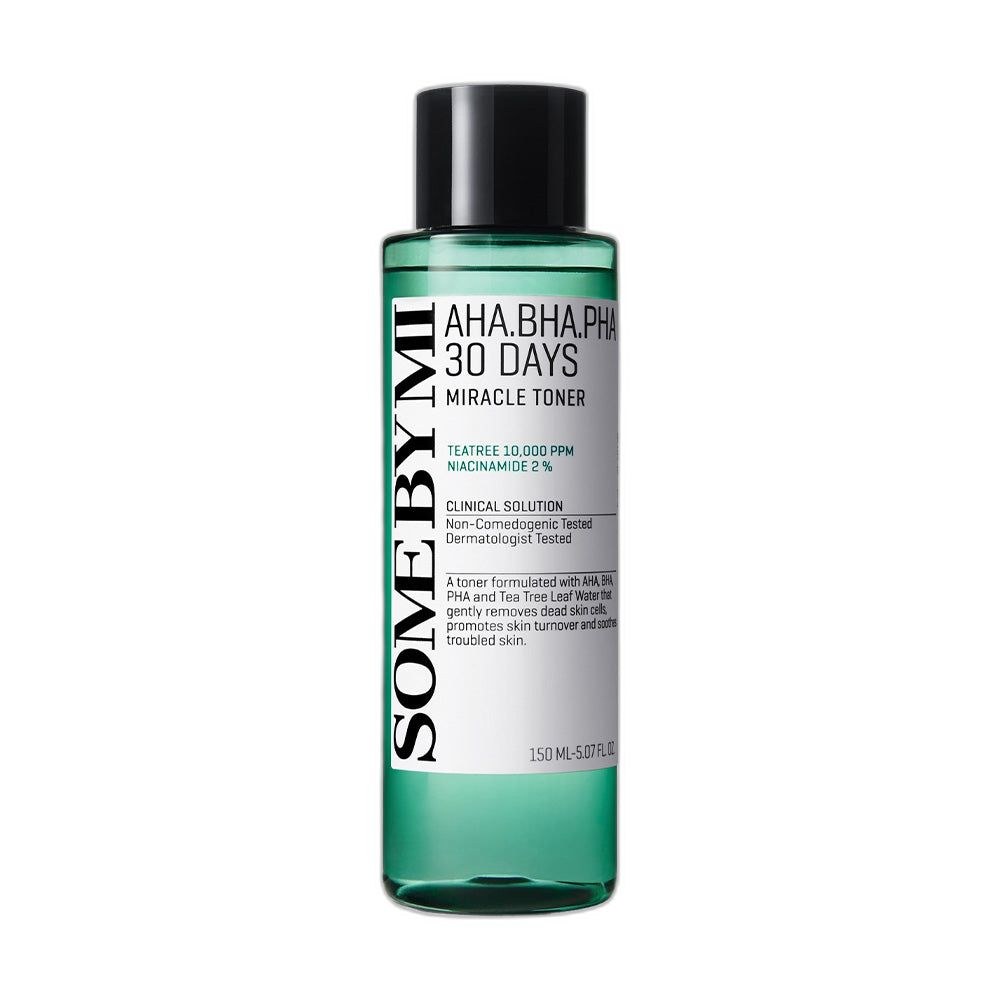
Isntree Chestnut PHA 5% Clear Cream. A moisturizing cream with 5% PHA that exfoliates while you hydrate. Perfect for sensitive skin that can’t tolerate stronger acids. Use daily as your moisturizer step.
The Combination Approach
Many Korean products combine all three acids at lower concentrations. This gives you the benefits of each acid without the irritation risk of a single high-concentration product.
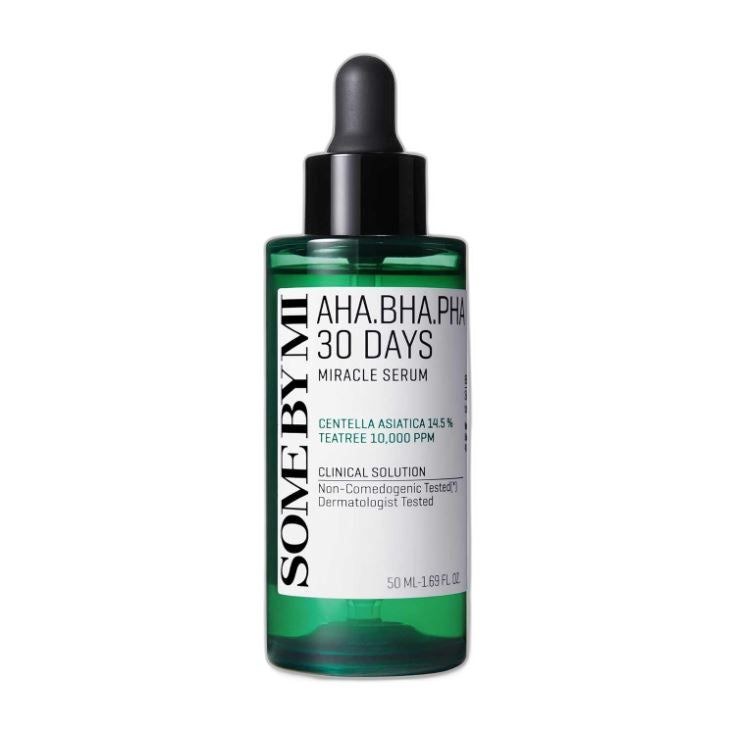
SOME BY MI AHA BHA PHA 30 Days Miracle Serum. The classic triple-acid product. Low concentrations of each acid for daily gentle exfoliation. Tea tree and niacinamide add antibacterial and brightening benefits. A good choice if you have multiple concerns and want one product to address them all.
How to Use Chemical Exfoliants
- Start slow. 1 to 2 times per week, regardless of which acid you choose.
- Apply after cleansing. On clean, dry skin. Wait 15 to 20 minutes before continuing your routine (for maximum effectiveness at the correct pH).
- Don’t mix multiple acids in one session. AHA Monday, BHA Thursday is fine. AHA and BHA in the same evening is asking for irritation.
- Always wear sunscreen the next day. All chemical exfoliants increase photosensitivity. A good Korean sunscreen is essential.
- Listen to your skin. Stinging that fades in 30 seconds is normal. Burning, prolonged redness, or peeling means you’re overdoing it.
Quick Decision Guide
| Concern | Best Acid |
|---|---|
| Acne and blackheads | BHA |
| Dull skin and dark spots | AHA |
| Sensitive or reactive skin | PHA |
| Fine lines | AHA |
| Oily skin | BHA |
| Dry skin | AHA (with hydrating follow-up) |
| Using retinol already | PHA |
| Never exfoliated before | PHA |
The right exfoliant isn’t about choosing the “strongest” acid. It’s about matching the acid to your specific skin needs. When you get that match right, chemical exfoliation becomes the most transformative step in your skincare routine.
For more on how fermented ingredients in skincare connect to gut health, see How to Make Sauerkraut at Home on Rooted Glow, where we explore fermented foods that support skin from the inside.
Related reading: Skincare Ingredient Compatibility Guide, and if your main concern is uneven texture and clogged pores, start with the textured skin and clogged pores reset routine — it pairs BHA with barrier repair in the right cadence for a visible reset.
Frequently Asked Questions
Which is stronger: AHA, BHA, or PHA?
AHAs (glycolic, lactic) are the strongest at surface resurfacing. BHA (salicylic acid) is strong inside pores but gentler on the surface. PHAs are the weakest but also the most tolerable for sensitive skin. “Strong” isn’t automatically better — matching acid to concern matters more than potency.
Can I use AHA and BHA together?
Yes, but not at full strength in the same step. Either alternate nights (AHA Monday/Wednesday/Friday, BHA Tuesday/Thursday), or use a blended low-concentration product like Some By Mi’s AHA-BHA-PHA toner. Stacking high-strength AHA and BHA simultaneously almost always damages the barrier.
How often should I exfoliate with chemical exfoliants?
Most skin types tolerate 2 to 3 times per week. Sensitive skin: once a week, PHA only. Very resilient oily skin: 3 to 4 times per week maximum. Daily chemical exfoliation is rarely advisable — the barrier needs recovery time between treatments.
Do I need to wear sunscreen if I use chemical exfoliants?
Absolutely, and more diligently than usual. AHAs in particular increase photosensitivity for up to a week after application. Skipping sunscreen while exfoliating causes pigmentation that takes months to reverse. This isn’t optional.
Is glycolic acid better than lactic acid?
Neither is universally “better” — they work at different depths. Glycolic acid has the smallest molecule, penetrates deepest, and works fastest on pigmentation and wrinkles. Lactic acid is gentler, more hydrating, and better for dry or sensitive skin. Most people benefit from starting with lactic acid and graduating to glycolic if needed.
Can I use chemical exfoliants with retinol?
Not in the same routine step, and usually not on the same night. Retinol already accelerates cell turnover — adding an acid on top is typically too much for the barrier. Alternate nights (retinol Monday/Wednesday, exfoliant Tuesday/Thursday), and always pad with ceramide moisturizer.
What’s the safest exfoliant for beginners?
PHAs (gluconolactone, lactobionic acid). They work at the skin surface only, have large molecules that can’t penetrate deeply, and come with built-in hydrating and antioxidant benefits. If you’ve never used a chemical exfoliant before, start here.
For incorporating BHA into a cycle-synced approach to hormonal breakouts, see our hormonal acne Korean routine — it includes a weekly actives schedule that staggers BHA and retinol around your cycle.